Xelivor
Xelivor
Xelivor
Precision-engineered optical interconnect housings compatible with world-leading standards, optimized for Azerbaijan's harsh climate and seismic zones.
Industry Experience
Annual Export Value
Dedicated R&D Specialists
Global Supply Chain Network
As the geographical pivot of the South Caucasus and a critical hub along the Middle Corridor (Trans-Caspian East-West Trade and Transit Document Pathway), Azerbaijan is undergoing a profound structural shift in its telecommunication systems. Led by state agencies such as Aztelekom and Baktelecom under the Ministry of Digital Development and Transport, the nation is actively deploying nationwide Fiber-to-the-Home (FTTH) networks and scaling up data center capacities. From the modern administrative servers in Baku to industrial automation nodes in Ganja, Sumgait, and Mingachevir, the demand for highly reliable, space-efficient network hardware has reached an all-time high.
In these demanding operating conditions, standard network modules face performance degradation due to maritime humidity near the Caspian Sea and thermal stress within enclosed industrial enclosures. Consequently, systems integrators and state departments are shifting procurement mandates toward military-grade or strictly compliant SFF (Small Form-factor Pluggable) hardware featuring advanced Electromagnetic Interference (EMI) containment and integrated thermal management solutions.
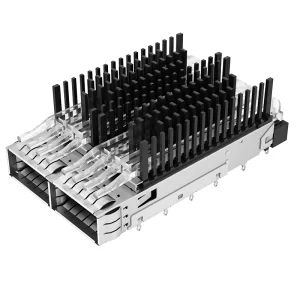
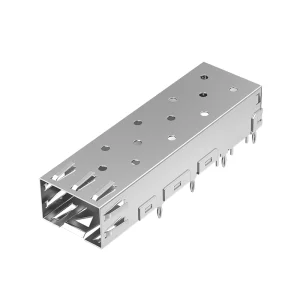
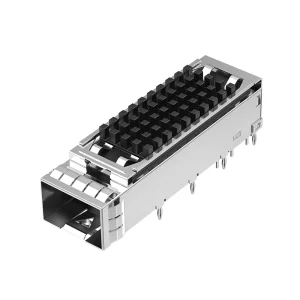
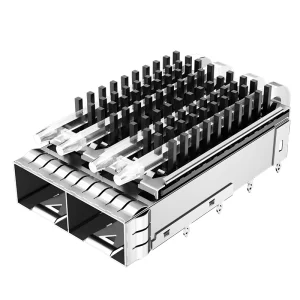
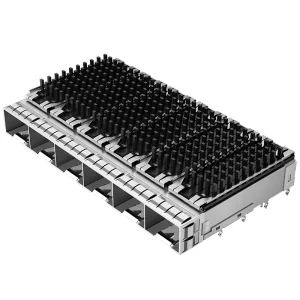
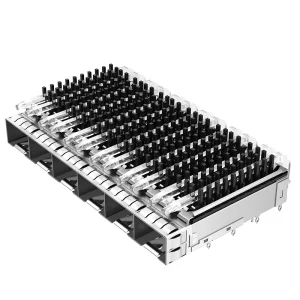
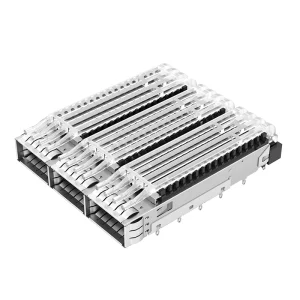
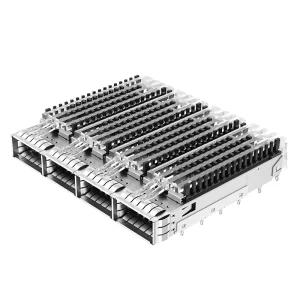
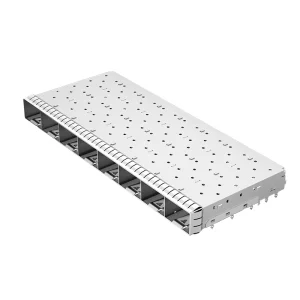
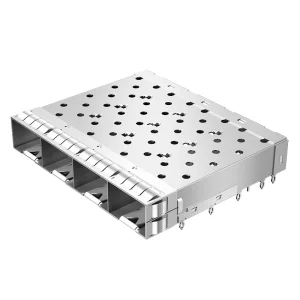
1xN (Ganged) SFP/SFP+ cage configurations arrange adjacent optical interfaces in a single, horizontally continuous metal block (e.g., 1x2, 1x4, 1x6, 1x8 ports). Unlike stacked configurations, ganged ports maximize horizontal PCB space and are optimized for low-profile applications, such as 1U rack-mount switches, carrier-grade routers, and edge network interface units.
By designing the cage housing as a unified component, engineers achieve several critical advantages:
| Mounting Profile | Retention Force | Thermal Dissipation Capacity | Best Fit Use Case |
|---|---|---|---|
| Press-Fit (Elastic Eye-of-Needle) | Medium-High (Cold Weld) | Highly customizable via top-mounted spring clips | Dense high-speed switches, telecom hubs, clean-room datacenters |
| Through-Hole Solder (THT) | Maximum (Mechanical Alloy Joint) | Optimized for passive chassis heat sinks | Heavy industrial automation, oil/gas rigs (SOCAR offshore), rail grids |
For engineering firms, defense contractors, and telecom operators in Azerbaijan, importing critical infrastructure components from Chinese specialized manufacturers offers significant strategic advantages. As a primary exporter in China’s high-tech optical manufacturing clusters, Xelivor Optoelectronics Co., Ltd. utilizes a highly optimized supply chain model that bridges the gap between high-speed R&D prototyping and volume assembly.
While maintaining a highly efficient and specialized 386 m² advanced design and test center, Xelivor is integrated with over 850 downstream raw material suppliers, stamping facilities, and plating specialists. This unique structure ensures:
Industrial networking components must be tailored to their operational environments. In Azerbaijan, three key sectors directly benefit from specialized 1xN SFP cages:
I. Offshore Caspian Sea Oil & Gas Extraction:
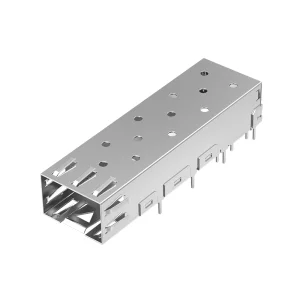
Operations managed by SOCAR and international consortia require telemetry and control networks deployed on offshore platforms. These installations face extreme mechanical vibrations and salty, corrosive atmospheric conditions. Through-Hole Solder (THT) 1xN SFP+ cages provide a gas-tight, solder-anchored joint that resists vibration-induced contact failure, outperforming standard press-fit designs under mechanical stress.
II. Baku Metropolitan Transit Systems & Rail Communication:
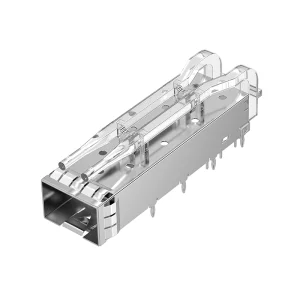
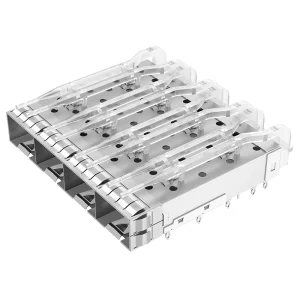
Modernizing signaling, trackside sensors, and CCTV backhauls demands ruggedized, high-density Ethernet switches. Utilizing a 1x4 or 1x6 ganged SFP cage assembly with integrated light pipes allows field engineers to quickly verify link status in low-light utility corridors while maintaining high throughput configurations on compact, DIN-rail mounted network appliances.
III. Smart Grid & Municipal Infrastructure in Karabakh Region:
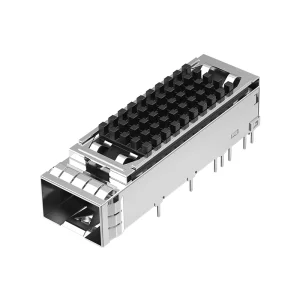
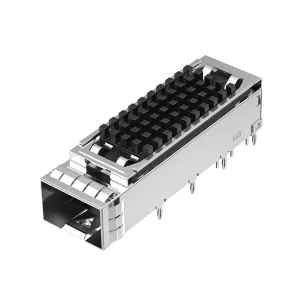
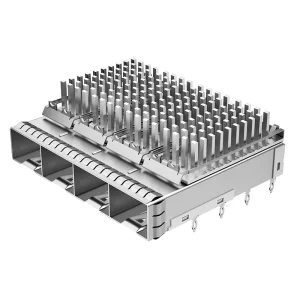
Building greenfield smart cities demands components that are highly reliable and require minimal field maintenance. Using EMI-shielded 1x2 and 1x4 SFP cages with custom-designed pin-fin heatsinks ensures switches deployed in passive, uncooled outdoor cabinets do not experience thermal shutdown under the hot summer sun of the Kura-Aras Lowland.
As telecom infrastructure transitions from 10G/25G to 100G, 400G, and 800G, the physical requirements for interconnect interfaces are evolving. Signal losses increase exponentially at higher speeds, making traditional PCB-to-cage paths a performance bottleneck.
Key design adjustments shaping future optical components include:
For telecom procurement directors, sourcing ganged optical interfaces requires verifying strict compliance with electrical, mechanical, and environmental standards.
To ensure reliable field performance, buyers should evaluate key metrics during the sourcing process:
Expert insights on electrical, thermal, and mechanical properties of high-speed interconnect cages.
Explore our full range of 1xN configurations, engineered to provide robust connectivity and thermal protection for modern networking projects.
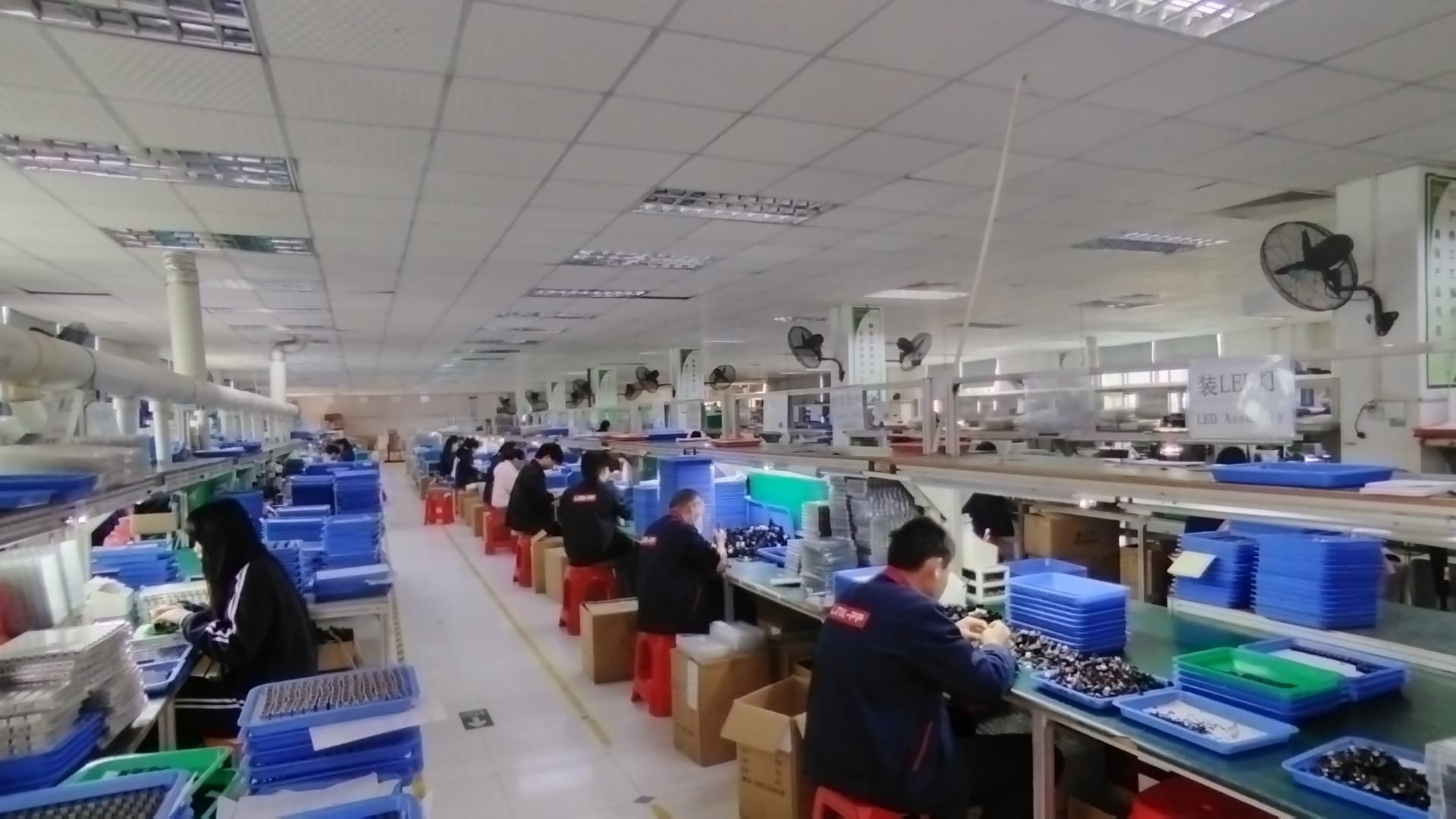
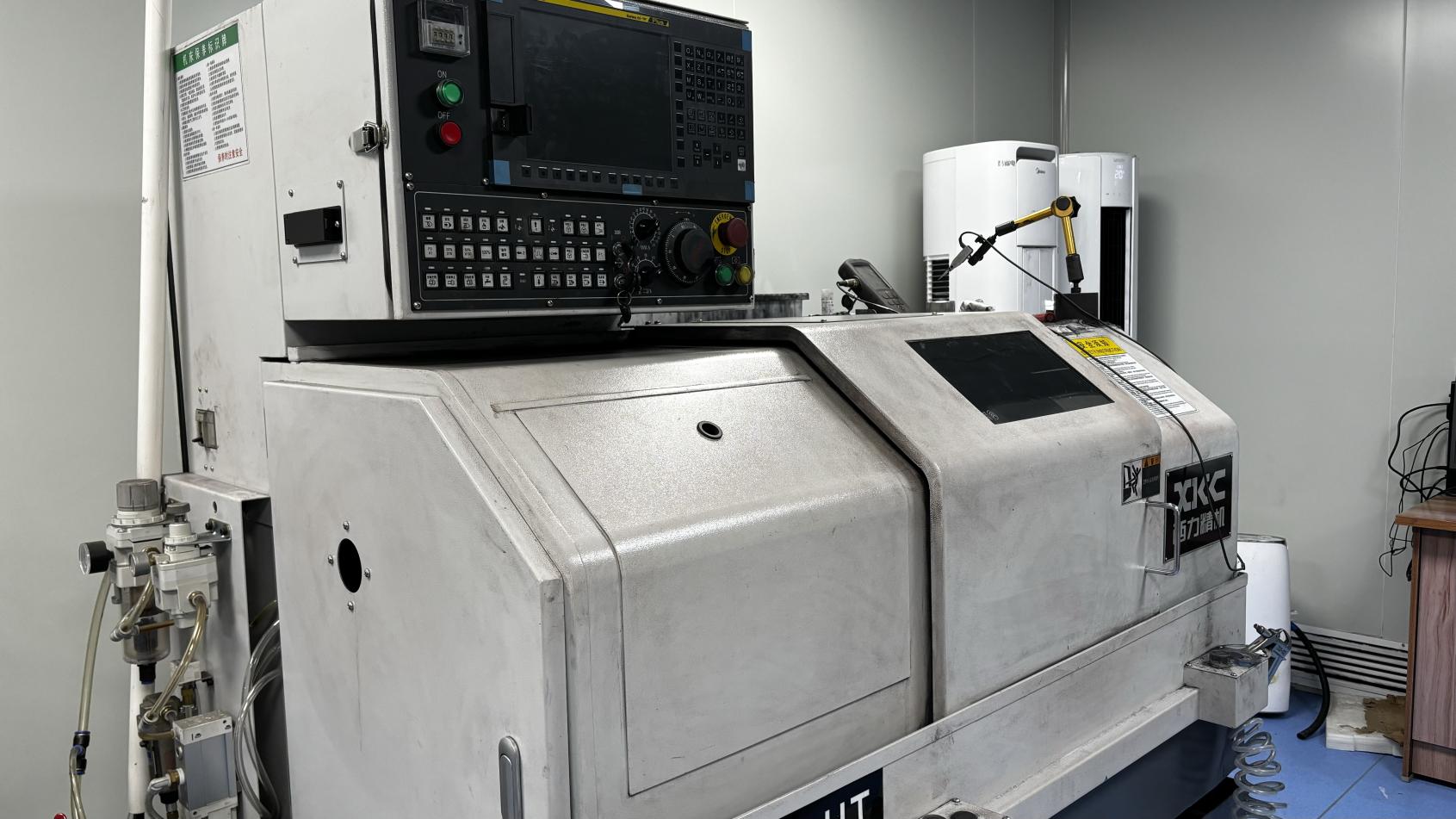
Xelivor Optoelectronics Co., Ltd. is a professional manufacturer of optical transceivers and fiber connectivity solutions, dedicated to serving global data center, telecom, enterprise network, and cloud computing industries. Established in 2016, the company operates from a modern manufacturing facility covering 386 m² and has built a strong reputation for delivering reliable, high-performance optical communication products worldwide.
With over 8 years of industry experience and 6 years of export experience, Xelivor has achieved annual export revenues exceeding USD 12 million. Our products are exported to customers across North America, Europe, Southeast Asia, the Middle East, and South America, supporting a wide range of networking applications from enterprise infrastructure to hyperscale data centers.
Xelivor specializes in the design, development, and production of optical transceivers, including SFP, SFP+, SFP28, QSFP28, QSFP-DD, OSFP, DAC, and AOC solutions. Backed by a dedicated R&D team of 68 engineers, the company continuously invests in innovation and launched more than 85 new products in the past year to meet the evolving demands of high-speed optical networks.
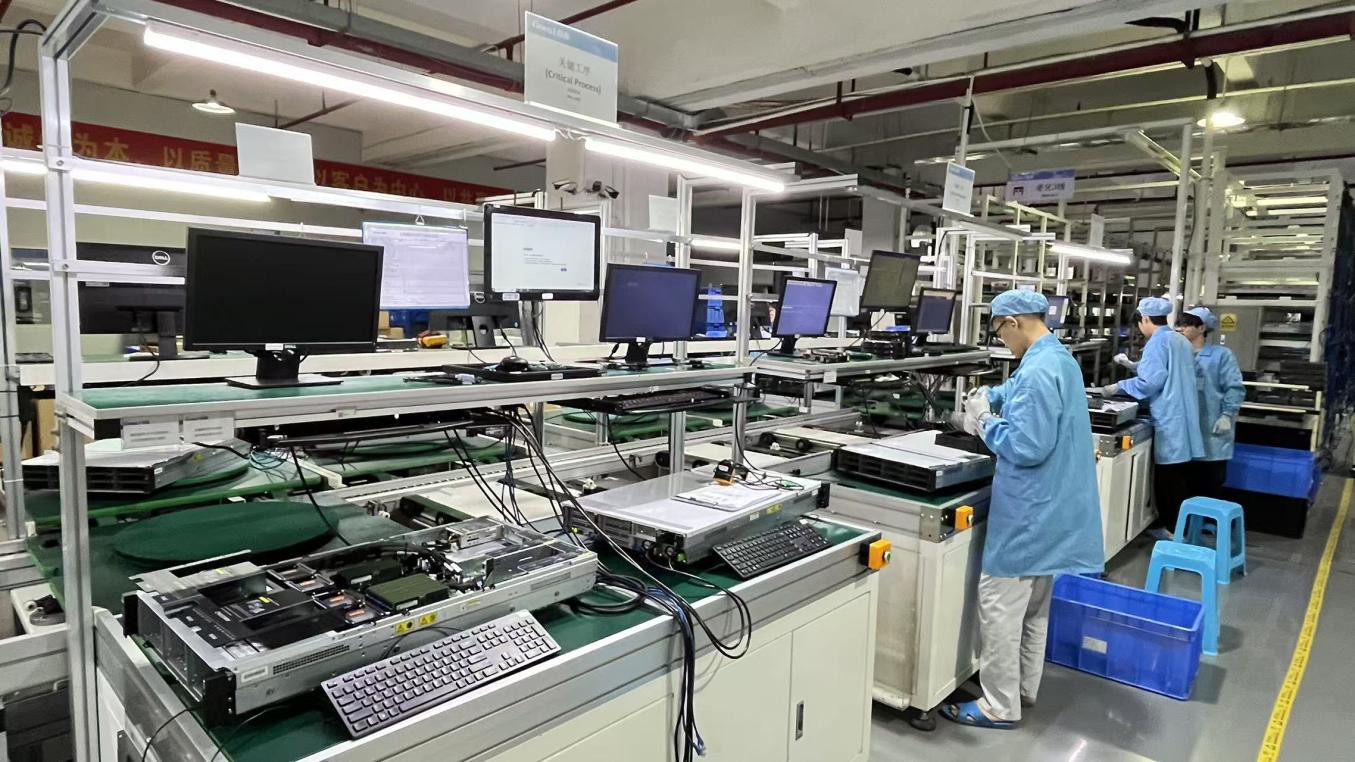
Quality is at the core of our operations. Our quality management system incorporates incoming material inspection, in-process quality control, aging tests, compatibility verification, optical parameter testing, and final product inspection. A professional quality assurance team of 32 inspectors ensures every product meets strict international standards before shipment.
The company maintains long-term cooperation with more than 850 supply chain partners, enabling stable sourcing, efficient production, and rapid delivery capabilities. Our flexible manufacturing system supports OEM, ODM, private label, customized firmware, customized labeling, and packaging services to satisfy diverse customer requirements.
As a company with strong independent R&D capabilities, advanced testing equipment, and a customer-oriented approach, Xelivor serves distributors, system integrators, telecommunications operators, data center providers, network equipment vendors, and enterprise customers worldwide.
Driven by innovation, quality, and partnership, Xelivor Optoelectronics Co., Ltd. remains committed to providing cost-effective, reliable, and future-ready optical communication solutions for global networking infrastructure.

Deploy reliable SFP/SFP+ interfaces designed to maintain high performance in challenging environments. Contact our engineering team for technical datasheets, CAD files, and sample units.
Request Immediate Callback & Samples