Xelivor
Xelivor
Xelivor
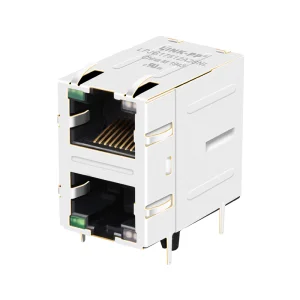
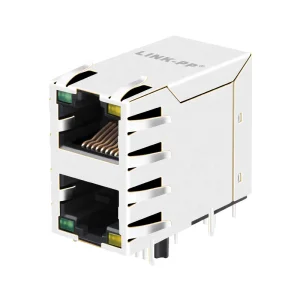
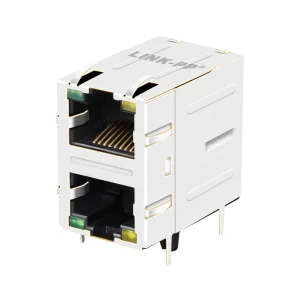
Discover our advanced, space-saving stacked RJ45 female connectors. Engineered for high-speed Ethernet routing, these multi-port integrated magnetics support rates up to 10G Base-T with optional PoE/PoE+ integration.
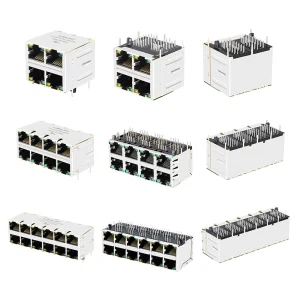
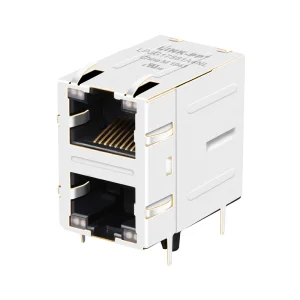
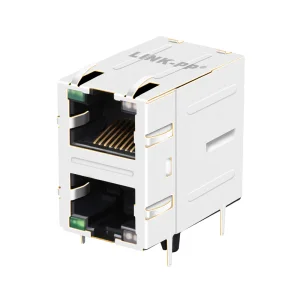
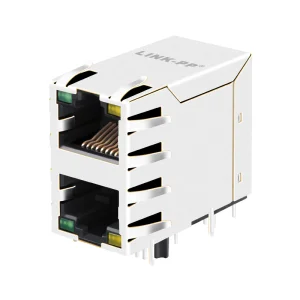
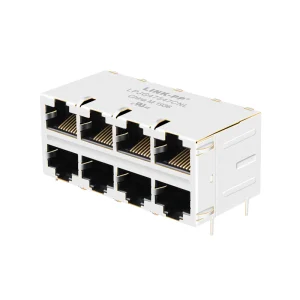
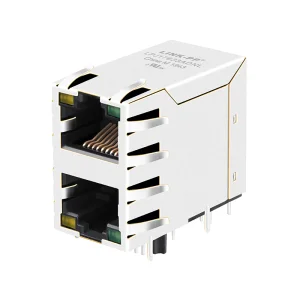
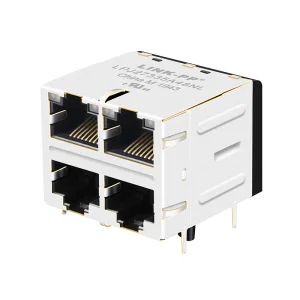
In modern networking hardware architectures, space on the physical Printed Circuit Board (PCB) is one of the most critical design constraints. As bandwidth demands scale from 1Gbps up to 2.5G, 5G, and 10G Ethernet, hardware engineers are pushed to maximize input/output (I/O) density at the system's edge. This engineering challenge is directly solved by the utilization of Stacked Port RJ45 Female Connectors.
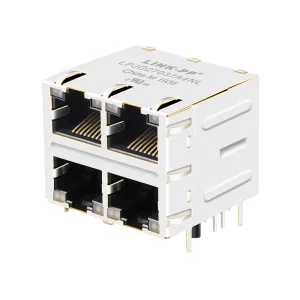
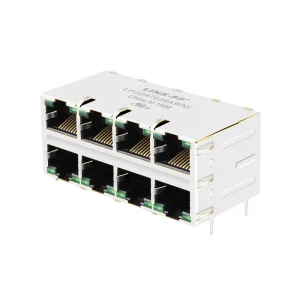
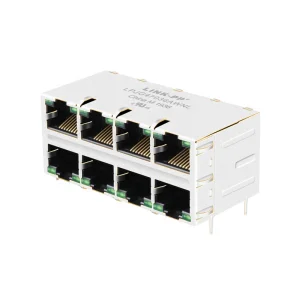
By arranging RJ45 modular jacks in a vertically stacked layout (e.g., 2x1, 2x4, 2x8 configurations), manufacturers can double the port density over a given horizontal width. However, this dense packaging introduces complex electrical, mechanical, and thermal challenges. Achieving high signal integrity at multi-gigabit speeds requires integrated magnetics (MagJacks) that provide electromagnetic interference (EMI) suppression, ESD protection, and physical isolation directly inside the connector module.
By stacking female RJ45 ports vertically (top and bottom decks), engineers save up to 50% of the horizontal faceplate area on switches, routers, and industrial controllers, leaving crucial space for fiber transceivers or thermal venting.
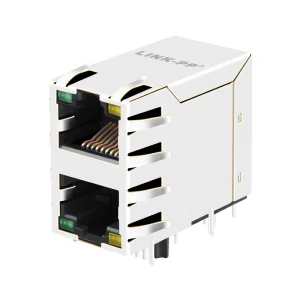
Stacked RJ45 connectors feature wrap-around metal shields with specialized EMI grounding fingers. These fingers establish direct contact with the panel enclosure, blocking high-frequency noise from radiation or reception.
Embedding isolation transformers, common-mode chokes, and Bob Smith termination networks inside the connector body stabilizes the PHY layer, minimizing signal attenuation and crosstalk across dense ports.
Engineering Note: High-speed stacked configurations (such as 2x4 2.5G or 10G Base-T) require careful routing of differential pairs on the PCB. The vertical height variance between the upper and lower deck contact pins introduces path delay variations (skew) which must be matched during design.
Cross-reference product classes, maximum data rates, and design options below. This matrix helps systems architects select the optimal interface based on bandwidth and power requirements.
| Port Layout | Supported Standards | Shielding Type | PoE Class Compatibility | Common Part Equivalences |
|---|---|---|---|---|
| 2x1 Port | 10/100/1000 Base-T, 2.5G | Shielded with LEDs / EMI Fingers | PoE+ (IEEE 802.3at) / Non-PoE | 0845-2D1T-AU, SS-7188S-A-PG4, 0844-2B1T-33-F |
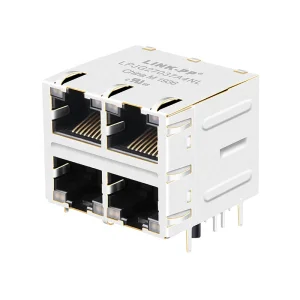
| 2x2 Port | 1000 Base-T, 5G | Shielded, Integrated Magnetics | Up to 30W per port | 0879-2C2R-DA, JX20-0252NL, RJSAE-5384-02 |
| 2x4 Port | 2.5G, 5G, 10G Base-T | Fully Shielded, Multi-finger | PoE+ / PoE++ (IEEE 802.3bt) | JC0-0131, DA6T00101, DU1T202A1 |
| 2x6 / 2x8 Port | Cat5e, Cat6, Cat6a (Multi-Gig) | High-Performance Spring Grounding | System-Customized Power Budget | Customized high-density enterprise configurations |
Stacked RJ45 female connectors serve as structural building blocks in robust communication matrices. From local enterprise hubs to extreme industrial automation fields, their configuration defines the limits of localized data pathways.
In modern high-density data server centers, stacked ports act as secondary local copper access networks. By integrating standard RJ45 systems alongside high-rate optical links (QSFP, OSFP), systems administrators maintain robust, copper-based local out-of-band management arrays that remain accessible even during transponder outages.
Industrial environments require components that survive wide temperature variations and mechanical vibrations. Our stacked connectors feature ruggedized, gold-plated contacts (up to 50 micro-inches) that prevent oxidation and fretting corrosion, ensuring stable contacts in high-stress assembly lines and outdoor telemetry platforms.
Modern smart security arrays, access controls, and environmental sensors rely on PoE+ to deliver up to 30W/60W of power over standard twisted-pair cabling. Our integrated stacked configurations are engineered with enhanced magnetics designed to handle high DC currents without saturating the internal transformer cores.
As a trusted manufacturer and exporter of network infrastructure components, Xelivor Optoelectronics Co., Ltd. delivers high-precision fiber connectivity and integrated connector solutions. Our operations are structured to satisfy the rigorous technical requirements of global system integrators and telecommunications providers.
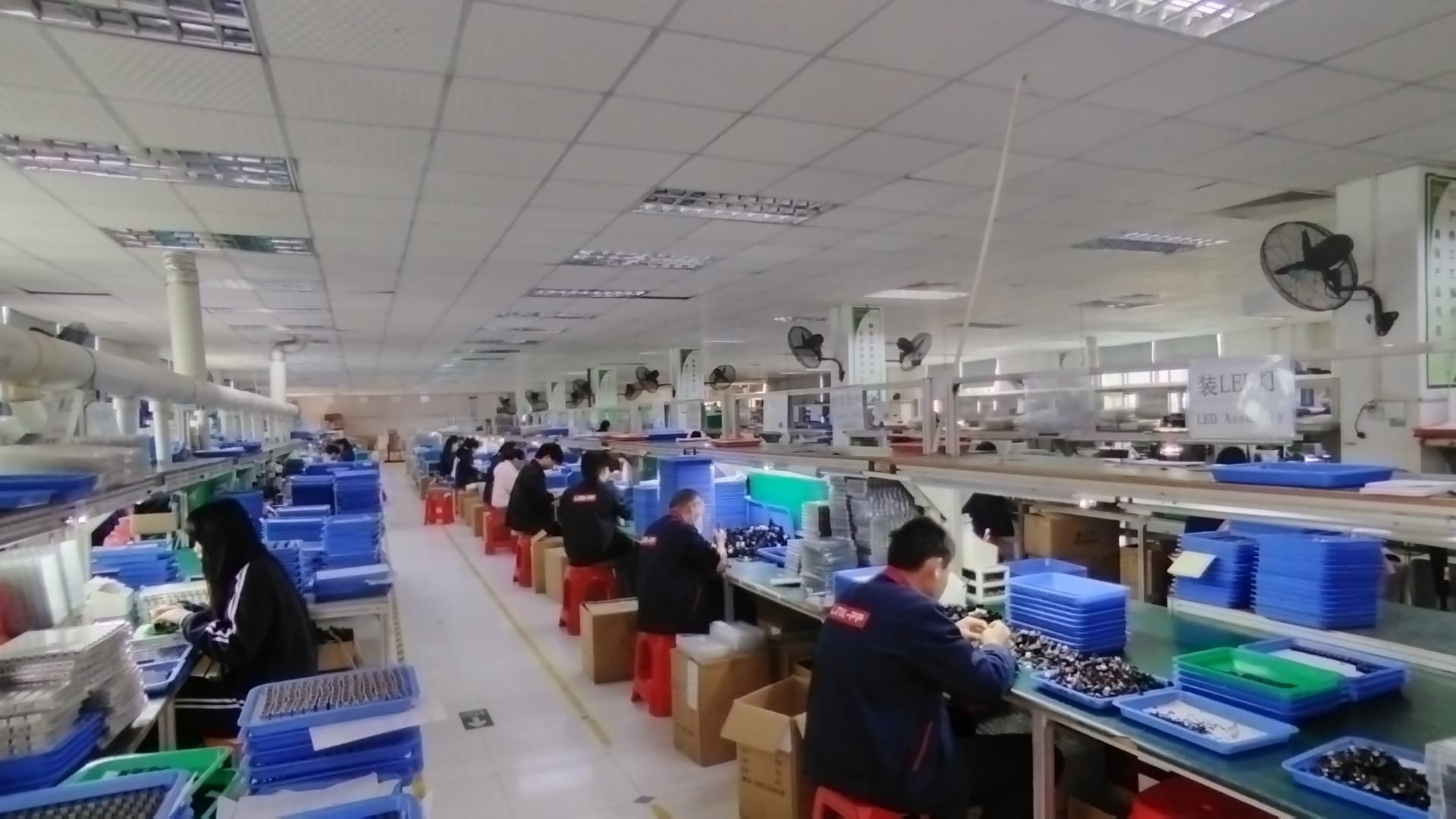
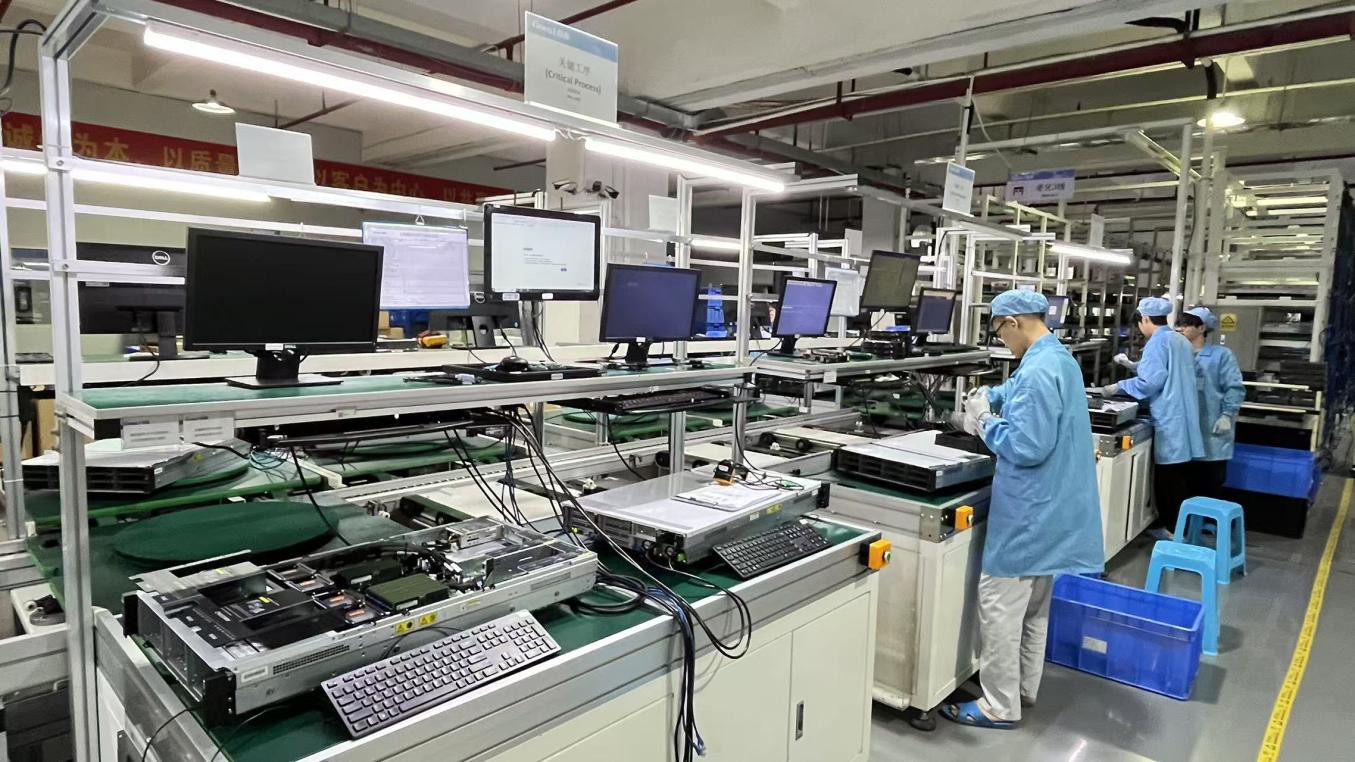
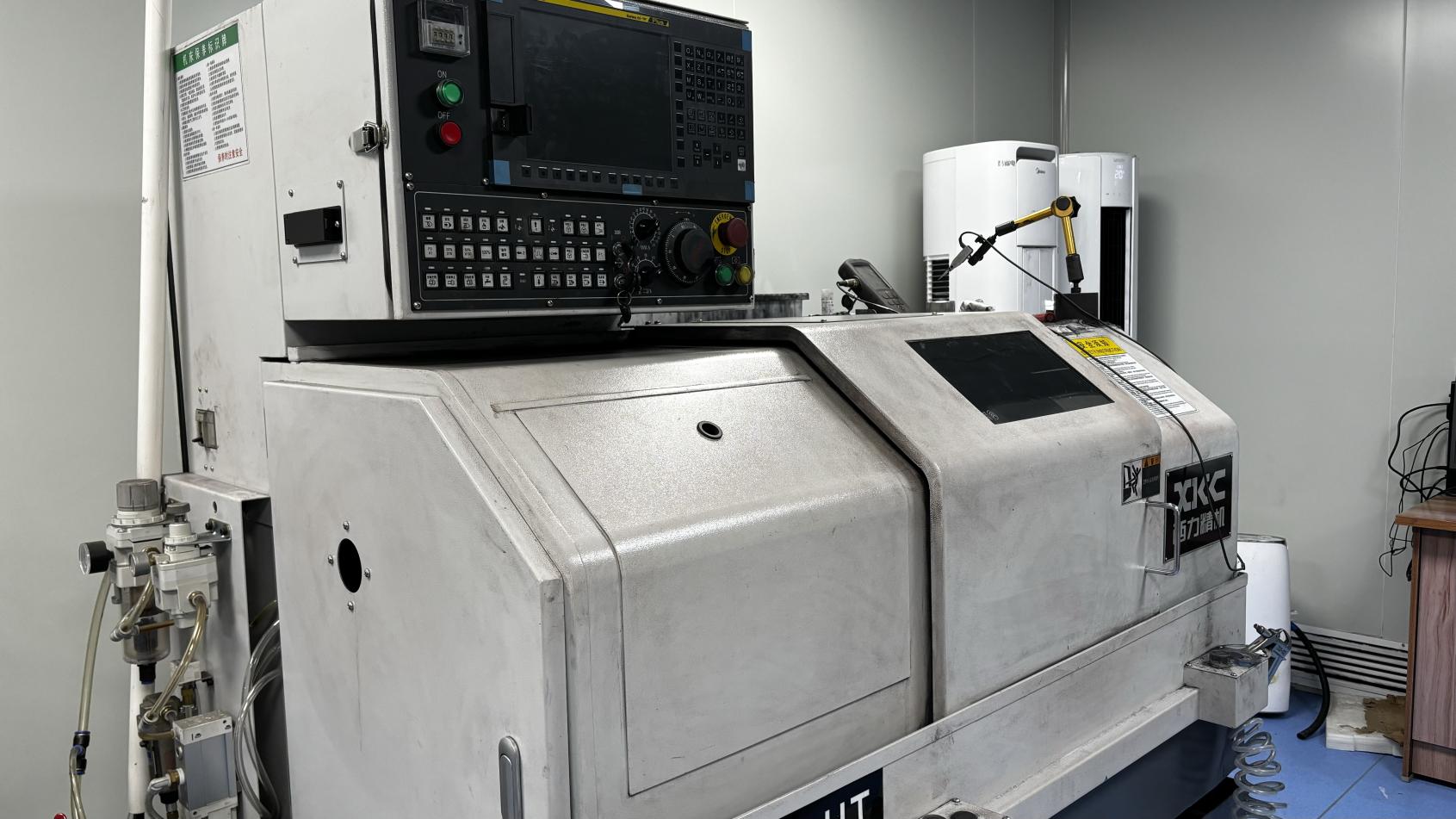
Established in 2016, Xelivor operates a modernized manufacturing facility configured for high-density components and complex assemblies. Our state-of-the-art facility features automated testing arrays, optical evaluation labs, and clean-room environments. To stay ahead of network technology cycles, our R&D team successfully engineered and launched over 85 custom transceiver and interconnect variations in the past fiscal year alone.
Quality assurance is embedded in our DNA. Backed by 32 dedicated inspectors, our QA process evaluates physical tolerances, contact pin alignment, electrical isolation, optical attenuation, and compatibility parameters. From initial raw materials verification through to the final packaging stage, every batch undergoes rigid screening to ensure compliance with RoHS, REACH, UL, and CE standards.

As data processing rates move closer to silicon limits, structural interfaces must evolve in lockstep. Below are the key engineering design trends shaping the future of multi-port connector architectures.
As 2.5G and 5G Base-T transitions to standard client hardware, our designs incorporate improved physical shielding to manage elevated high-frequency cross-talk (NEXT/FEXT) and structural return loss profiles up to 250 MHz and 500 MHz frequencies.
Powering remote devices up to 90W generates localized heat within multi-port, stacked connector bodies. Next-generation designs utilize high-temperature thermoplastic housings (LCP) and low DC resistance copper alloys to keep temperatures within safe limits.
Integrating protection components directly within stacked connector modules shortens electrical trace lengths, which significantly improves signal margin and system-level electrostatic discharge (ESD) resilience.
Review these technical answers to common integration questions concerning high-density stacked RJ45 female connectors.
Top and bottom deck ports run parallel and close to each other. To mitigate inter-port crosstalk, we design internal shielding plates between the upper and lower transformer layers. Grounding paths within the connector separate these channels, preventing noise coupling at high operating frequencies.
By integrating the isolation transformer, common-mode choke, and Bob Smith termination circuit inside the connector housing, you save valuable PCB space. This integrated design also places electromagnetic shielding closer to the input/output boundary, improving EMI performance.
Yes. Our standard high-density multi-port connectors are designed with high-temperature housing materials that withstand wave-soldering temperatures up to 260°C for 10 seconds. Reflow-solderable (Pin-in-Paste) configurations are also available upon request.
We recommend 30 to 50 micro-inches of gold plating over nickel contacts for industrial environments. This gold thickness provides excellent wear resistance and long-term protection against oxidation, maintaining low contact resistance across insertion cycles.
PoE introduces DC currents through the signal pairs. Our PoE-compatible stacked connectors are built with heavier gauge wire wraps and low-resistance contacts to minimize resistive heating, ensuring the assembly remains within its specified temperature range even under maximum power loads.
Browse our complete range of stacked modular jacks, including variants with integrated LEDs, customizable EMI fingers, and multi-gigabit compatibility.