Xelivor
Xelivor
Xelivor
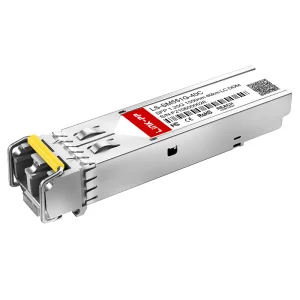
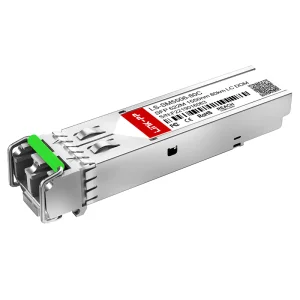
Explore our premium grade Multi Mode optical transceivers, network jacks, and high-performance interconnect interfaces designed for seamless system integration.
How physical media properties, VCSEL laser improvements, and OM3/OM4/OM5 fiber optimizations drive next-gen high-density architectures.
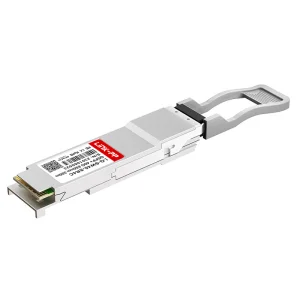
In modern telecommunications, the Multi Mode SFP (Small Form-factor Pluggable) module remains a core building block for high-bandwidth, short-reach applications. Traditionally relying on 850nm Vertical-Cavity Surface-Emitting Lasers (VCSELs), multi mode networks offer an optimal balance of transceiver cost, system power consumption, and ease of installation. Unlike single-mode systems that demand high-precision alignment of tiny core diameters (approx. 9 microns), multi mode fiber (MMF) uses core sizes of 50 microns or 62.5 microns. This allows for looser optical coupling tolerances, yielding significant capital expenditure (CAPEX) savings on transceivers.
To contextualize the technical parameters across standard optical fiber configurations, we look at the interaction between dispersion penalties and transmission reach. When upgrading from legacy OM2 to modern wideband OM5, the system bandwidth capacity increases by magnitudes, supporting multi-wavelength capabilities that make Multi Mode SFP modules highly scalable.
| Fiber Type | Core Diameter | Overfilled Launch Bandwidth (850nm) | Max 10G Link Length | Max 25G / 100G (BiDi) Link Length | Application Standard |
|---|---|---|---|---|---|
| OM2 | 50 μm | 500 MHz·km | 82 m | Not Recommended | Legacy LAN |
| OM3 | 50 μm | 2000 MHz·km | 300 m | 70 m | 10G/40G Data Center |
| OM4 | 50 μm | 4700 MHz·km | 400 m | 100 m / 150 m | High-Speed Backbone |
| OM5 (Wideband) | 50 μm | 4700 MHz·km (Supports 850-953nm) | 400 m | 150 m / 300 m (SWDM) | 400G Base-SR8 / SWDM4 |
Addressing OEM compatibility locks, supply chain bottlenecks, and thermal reliability criteria in modern enterprise optical networks.
Many major network vendors enforce custom host-device software blocks. Purchasing teams must secure modules programmed with appropriate EEPROM configuration codes matching targeted host devices (such as Cisco, Arista, Juniper, or HPE) to prevent Port Shutdown and CLI error messages.
OEM-branded transceivers carry marked-up pricing. Integrating third-party MSA compliant modules sourced directly from experienced Chinese manufacturers like Xelivor yields up to 70% reduction in procurement costs, allowing network expansion within strict budget cycles.
High-density line cards generate significant thermal load. Global sourcing managers require modules with low power consumption (<1W for standard Multi Mode SFPs) and robust Mean Time Between Failures (MTBF) exceeding 100,000 continuous operating hours.
A trusted global optical connectivity brand backed by rigorous QA, direct-supply integration, and continuous R&D innovation.
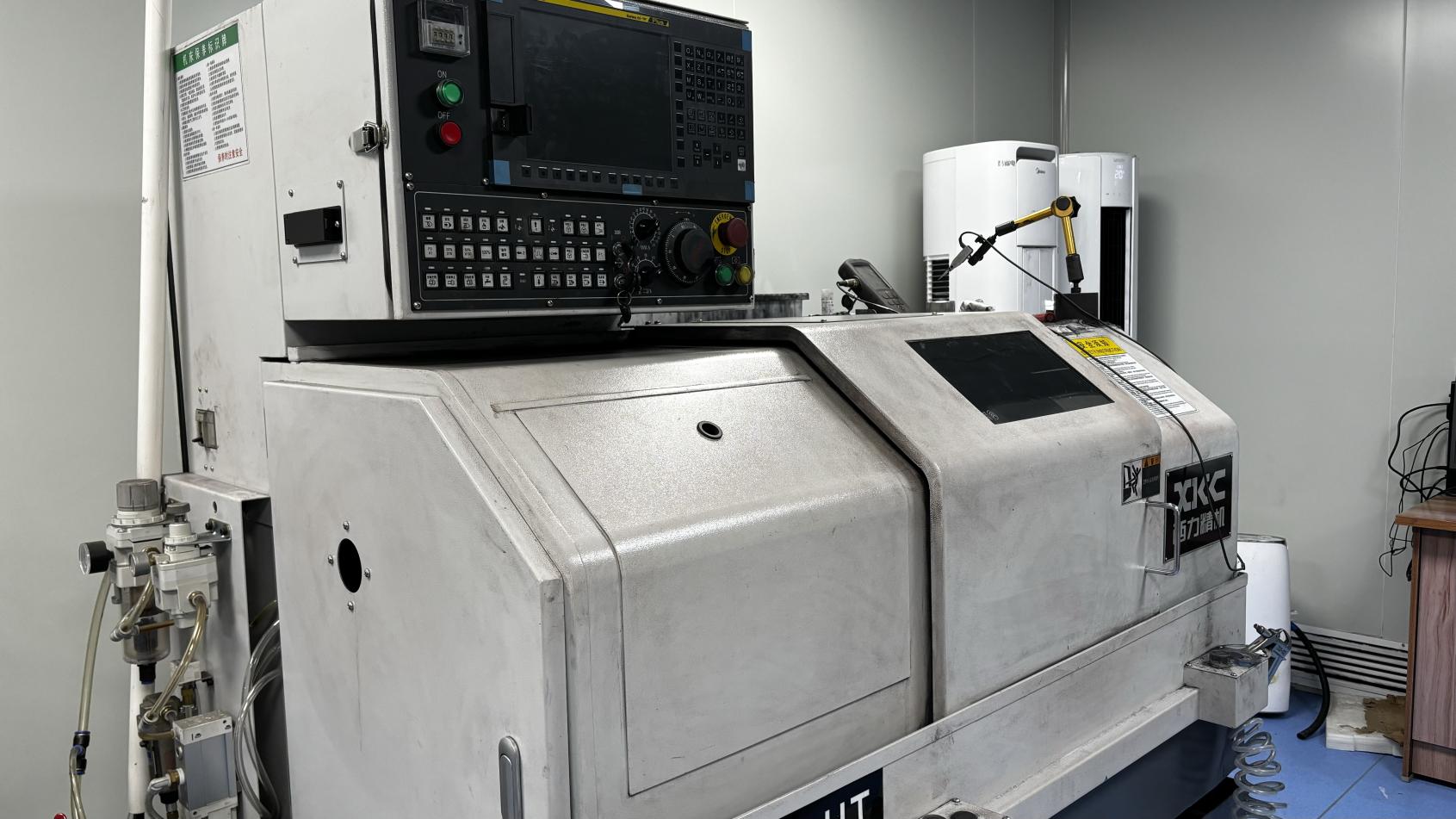
Xelivor Optoelectronics Co., Ltd. is a professional manufacturer of optical transceivers and fiber connectivity solutions, dedicated to serving global data center, telecom, enterprise network, and cloud computing industries. Established in 2016, the company operates from a modern manufacturing facility covering 386 m² and has built a strong reputation for delivering reliable, high-performance optical communication products worldwide.
With over 8 years of industry experience and 6 years of export experience, Xelivor has achieved annual export revenues exceeding USD 12 million. Our products are exported to customers across North America, Europe, Southeast Asia, the Middle East, and South America, supporting a wide range of networking applications from enterprise infrastructure to hyperscale data centers.
Xelivor specializes in the design, development, and production of optical transceivers, including SFP, SFP+, SFP28, QSFP28, QSFP-DD, OSFP, DAC, and AOC solutions. Backed by a dedicated R&D team of 68 engineers, the company continuously invests in innovation and launched more than 85 new products in the past year to meet the evolving demands of high-speed optical networks.
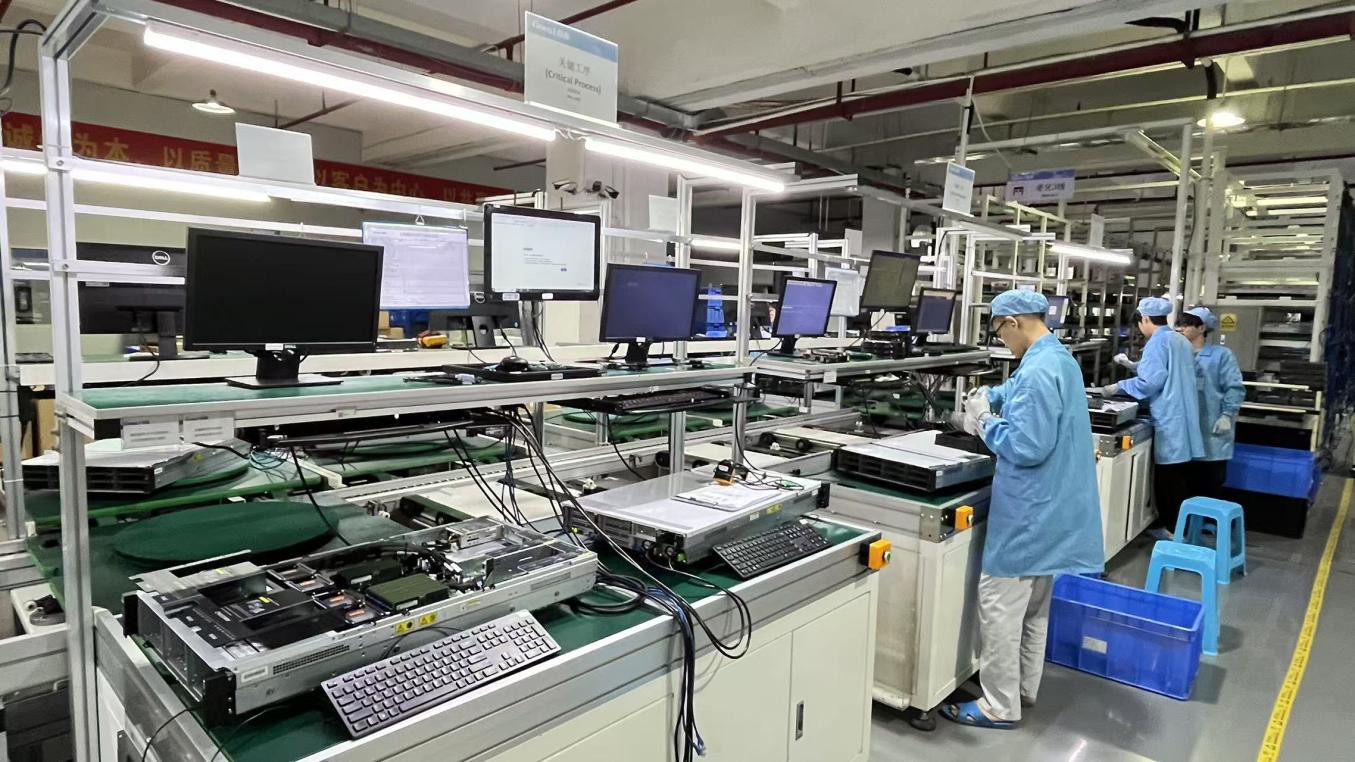
Quality is at the core of our operations. Our quality management system incorporates incoming material inspection, in-process quality control, aging tests, compatibility verification, optical parameter testing, and final product inspection. A professional quality assurance team of 32 inspectors ensures every product meets strict international standards before shipment.
The company maintains long-term cooperation with more than 850 supply chain partners, enabling stable sourcing, efficient production, and rapid delivery capabilities. Our flexible manufacturing system supports OEM, ODM, private label, customized firmware, customized labeling, and packaging services to satisfy diverse customer requirements.
As a company with strong independent R&D capabilities, advanced testing equipment, and a customer-oriented approach, Xelivor serves distributors, system integrators, telecommunications operators, data center providers, network equipment vendors, and enterprise customers worldwide. Driven by innovation, quality, and partnership, we remain committed to providing cost-effective, reliable, and future-ready optical communication solutions.


Custom optical integration patterns optimized for target network architectures.
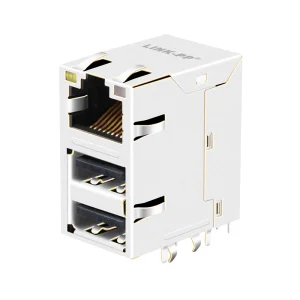
For Spine-Leaf architectures, our QSFP+ 40G/100G Multi Mode SR4 transceivers link Leaf switches to Top-of-Rack (ToR) compute modules. Utilizing high-efficiency 850nm VCSEL channels minimizes thermal load, lowering cooling costs in large-scale server halls.
Modern campus LAN backbones connect distribution closets to core switches over OM3 and OM4 multi mode fiber paths. Xelivor's 10G SFP+ and 25G SFP28 multi mode transceivers provide low-latency connectivity for high-speed local data sharing.
For harsh industrial environments subject to electromagnetic interference (EMI), fiber connections are critical. Industrial-grade temperature-hardened (-40°C to 85°C) SFP modules maintain stable links in processing plants, transport hubs, and utility facilities.
Meeting international quality and environmental standards for global network infrastructure deployments.
Deploying networking hardware across international boundaries requires adherence to regional environmental and technical standards. Optical components must meet rigorous testing to ensure long-term reliability and safe operation within enterprise and public infrastructures.
Our transceivers comply with CE, FCC, RoHS, and REACH requirements. This ensures hazardous substance restriction and prevents electromagnetic interference with neighboring server components.
Adhering strictly to standard Multisource Agreements (MSA) ensures mechanical footprint, power requirements, and signal pinouts fit comfortably into any compliant cage, guaranteeing long-term physical compatibility.
We back all Multi Mode SFP products with an extended hardware warranty and technical support. Our engineers assist remotely with compatibility settings and custom diagnostic programming.
Furthermore, Xelivor implements strict quality processes before export packaging. Each optical module undergoes automated laser tuning and bit-error-rate testing inside our state-of-the-art testing facility. This process ensures the optical output matches target sensitivity standards, preventing link drops and packet loss under full load.
How PAM4, Silicon Photonics, and Co-Packaged Optics will shape short-reach optical interconnect design.
As ethernet speeds scale past 800Gb/s and towards 1.6Tb/s, the design of short-reach optical links must evolve to manage power density and spectral efficiency. Multi Mode technology continues to adapt, driven by key architectural milestones:
Xelivor's R&D division actively designs and validates these technologies, working with partners to deliver cost-effective and future-ready multi-mode solutions.
Addressing key engineering, procurement, and deployment questions for optical network infrastructure.
The transmission reach depends on the fiber standard and wavelength. Over OM3 fiber, 10G SFP+ modules reach up to 300 meters, while OM4 extends this to 400 meters. For 25G SFP28 modules, the maximum reach is typically 70 meters on OM3 and 100 meters on OM4 fiber.
No. Multi mode SFP modules require multi-mode fiber with matching core sizes (50μm or 62.5μm). Connecting them to a 9μm single-mode fiber results in high coupling loss and signal attenuation, preventing the link from establishing.
Digital Diagnostics Monitoring (DDM), or Digital Optical Monitoring (DOM), is a feature that tracks transceiver parameters in real time. It monitors optical output power, input power, temperature, laser bias current, and supply voltage, enabling proactive troubleshooting.
We maintain a comprehensive compatibility lab equipped with switches from Cisco, Arista, Juniper, HPE, and others. We program each module's EEPROM with customized configuration files and test compatibility on the target host platforms before shipping.
Most standard multi-mode SFP transceivers (such as 10G SR and 25G SR) use an 850nm VCSEL laser. Newer SWDM4 standards use multiple wavelengths ranging from 850nm to 953nm over OM5 fiber to increase link capacity.
Sourcing directly from OEM/ODM partners like Xelivor allows you to customize the internal microcode, labeling, and packaging, while reducing middleman markups. This ensures high compatibility and cost efficiency for large scale fiber deployments.
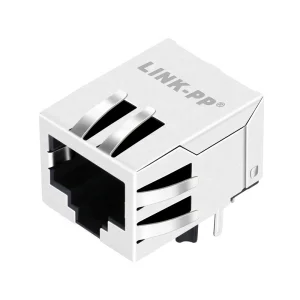
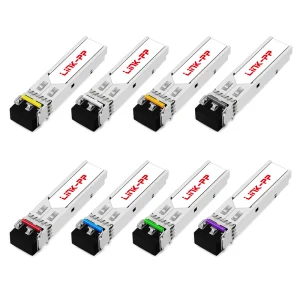
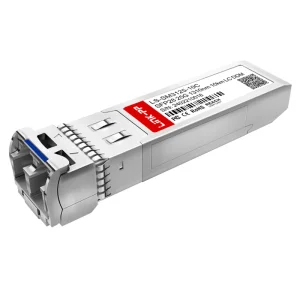
Complete your deployment with our range of high-density SFP cages, RJ45 ports, and multi-wavelength transceivers.