Xelivor
Xelivor
Xelivor
In the era of hyper-scale cloud data centers, decentralized edge computing, and high-frequency industrial automation, physical layers represent the bedrock of signal integrity. Xelivor Optoelectronics Co., Ltd. stands at the forefront of this industrial transformation. Established in 2016, Xelivor has evolved into a premier developer and manufacturer of advanced fiber connectivity solutions and high-performance copper Ethernet interfaces, including state-of-the-art RJ45 bridge connectors, Integrated Connector Modules (ICMs), and high-speed transceivers.
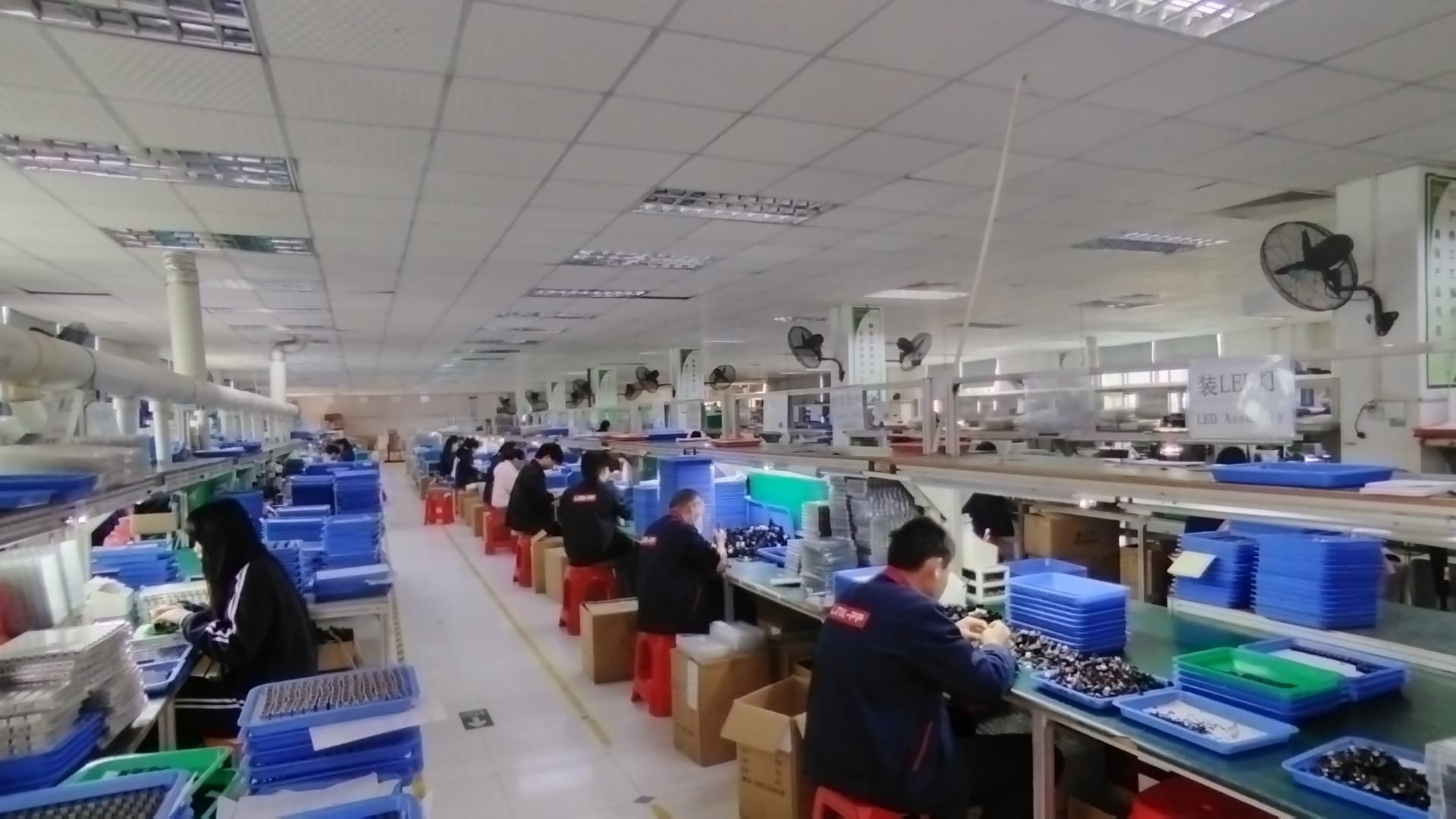
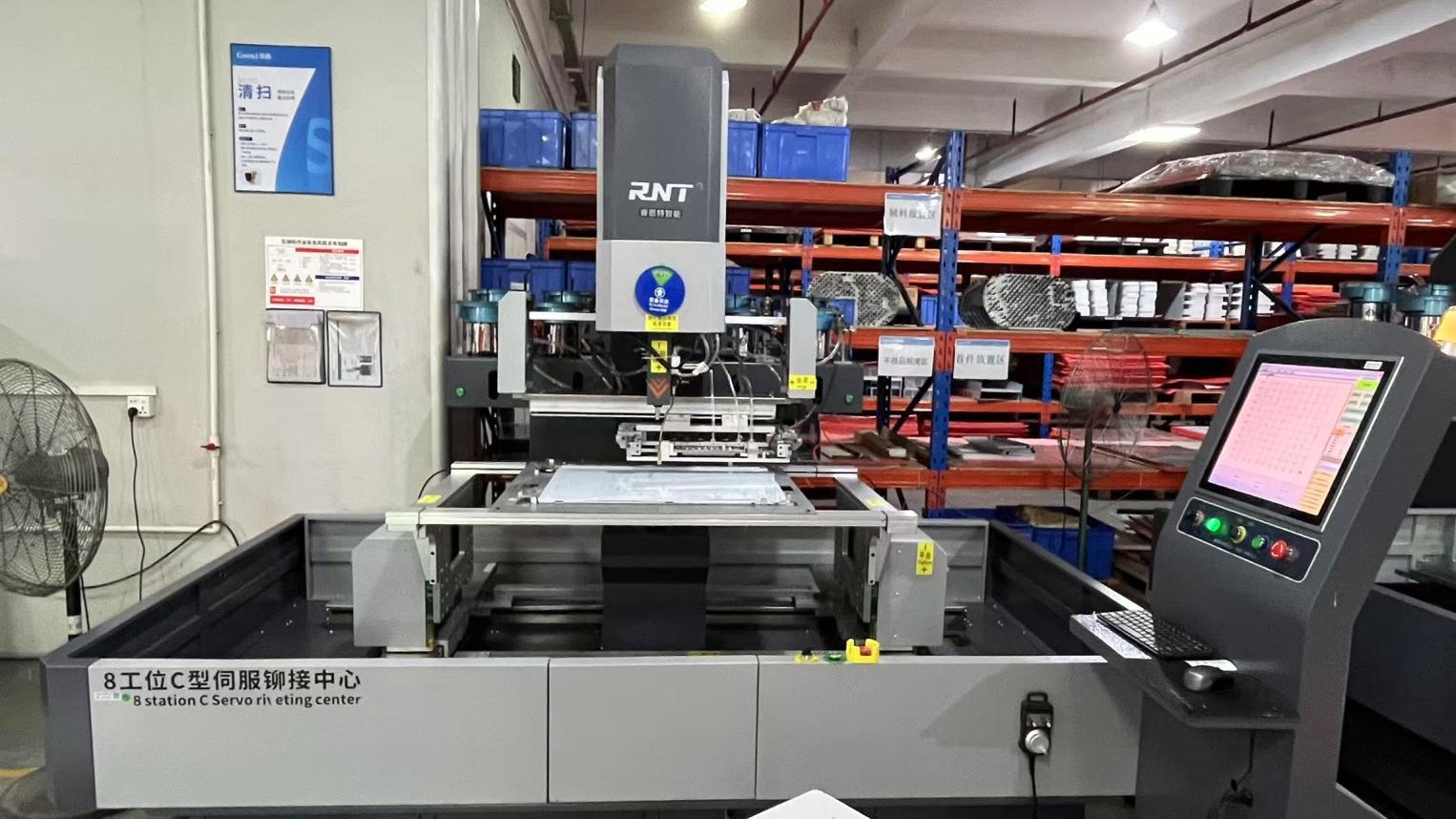
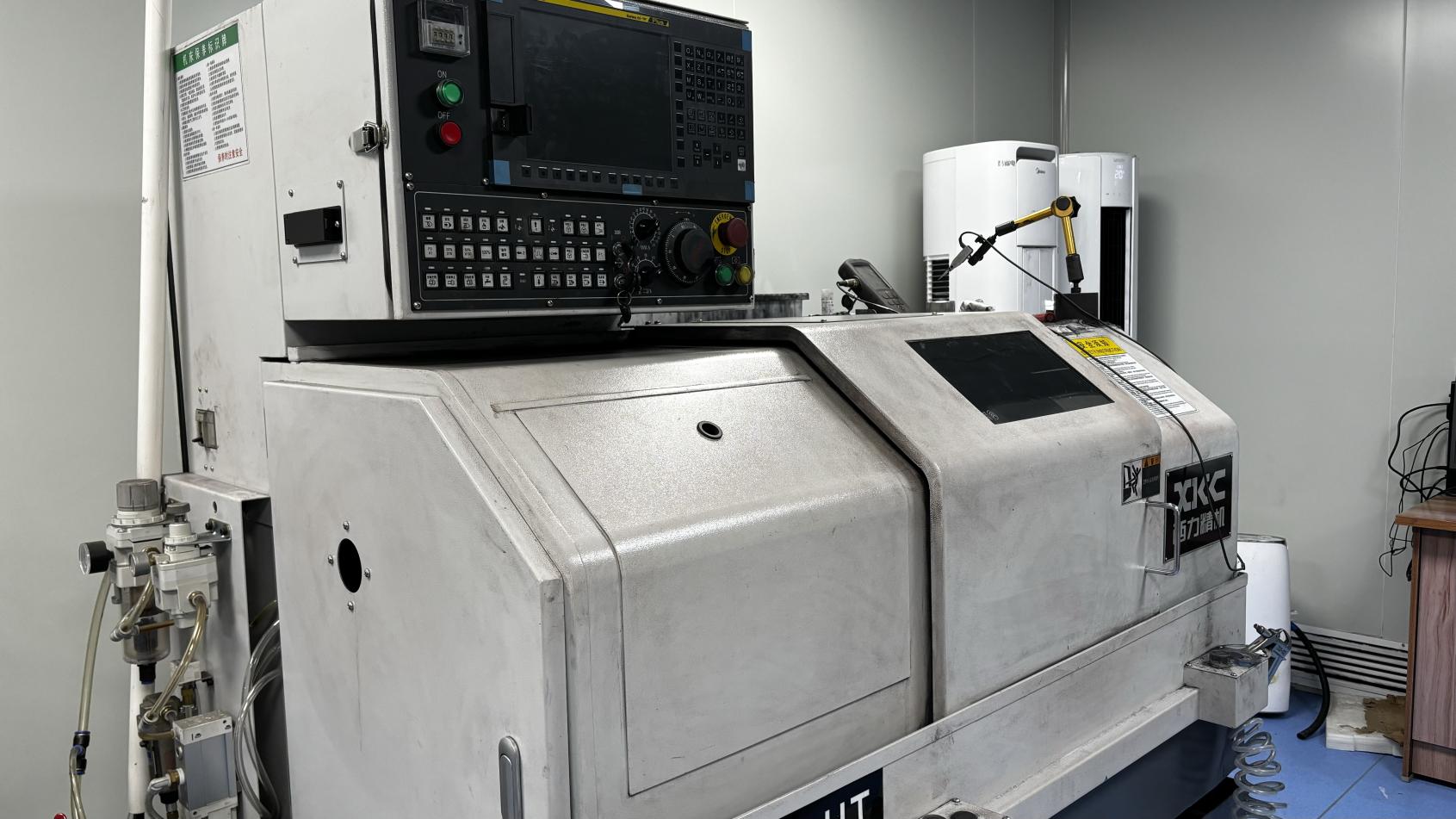
Operating out of a highly specialized manufacturing and R&D facility designed for high-frequency testing and micro-assembly, Xelivor has combined structural engineering with advanced materials to serve the telecommunications, cloud computing, and enterprise network sectors globally. Over the last 8 years, our engineering department has bridged the physical and electrical divide by custom-designing interfaces that mitigate Electro-Magnetic Interference (EMI), manage high thermal outputs in Power over Ethernet (PoE/PoE+/PoE++) applications, and sustain critical insertion loss criteria.
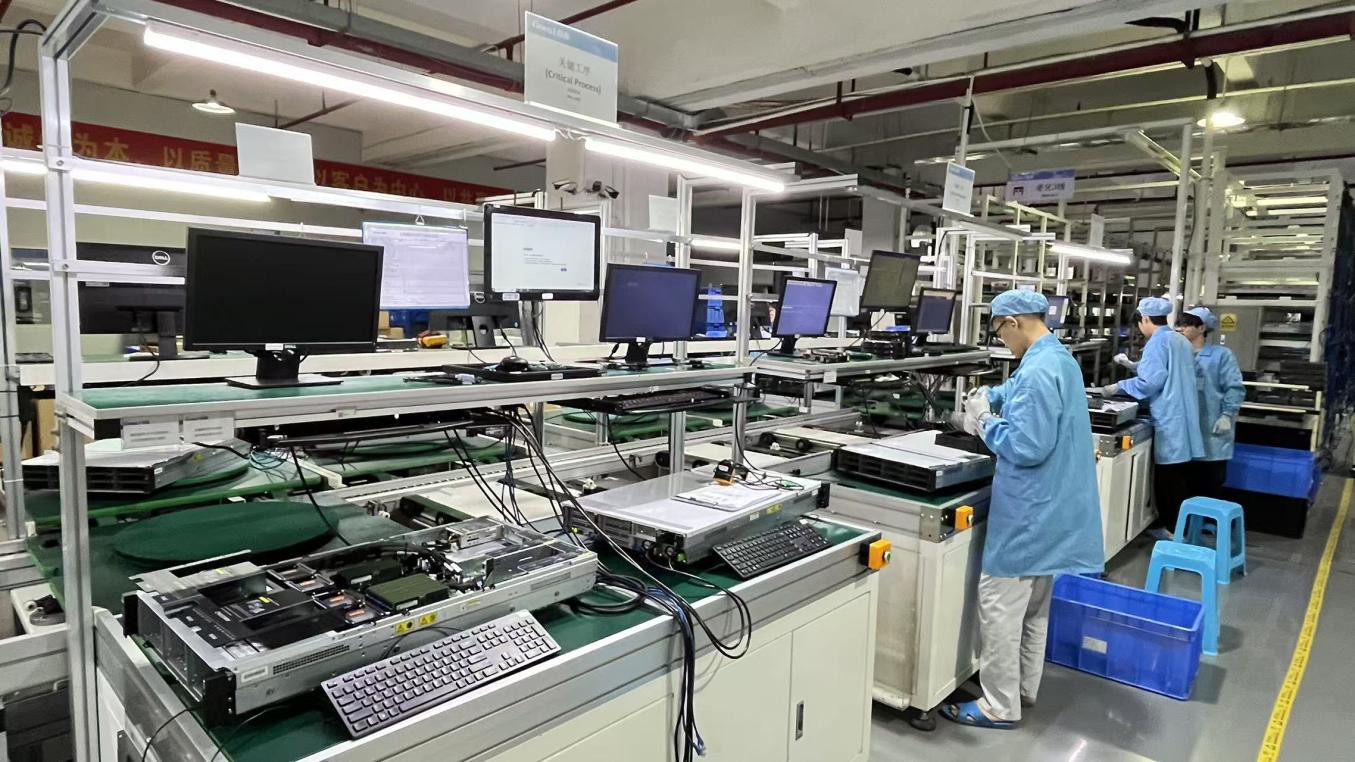
Through a robust manufacturing system that integrates OEM, ODM, and customized firmware engineering, Xelivor supplies international system integrators and tier-1 network hardware vendors with fully compliant, long-lifespan network couplers and modules. Our strict quality management framework enforces 100% optical parameter testing, compatibility verification matrices, and environmental simulation chambers to guarantee field-deployed components perform without degradation.
The terminology of a "bridge connector" in RJ45 architecture extends beyond basic physical extension. It refers to highly engineered coupling and connection mechanisms that link PCB assemblies, system components, or multi-port interfaces without introducing attenuation, impedance mismatches, or crosstalk (NEXT/FEXT).
Modern environments are saturated with radio-frequency noise. High-grade RJ45 bridge connectors employ 360-degree brass or copper-alloy shielding, nickel-plated to prevent corrosion, and integrated grounding tabs to safely ground stray transient currents.
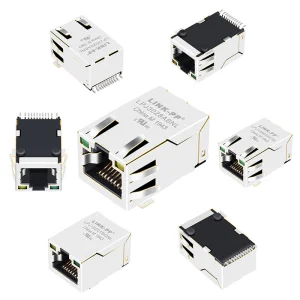
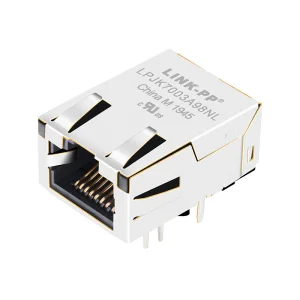
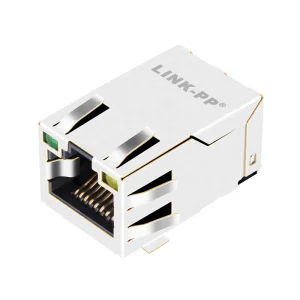
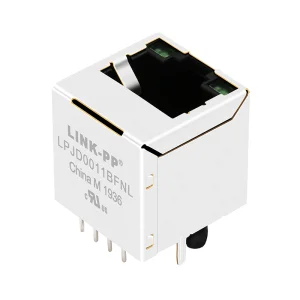
Known as MagJacks, these devices embed isolation transformers, common-mode chokes, and electrical filters directly inside the RJ45 housing. This saves board space and isolates delicate silicon chips from voltage spikes up to 1500V.
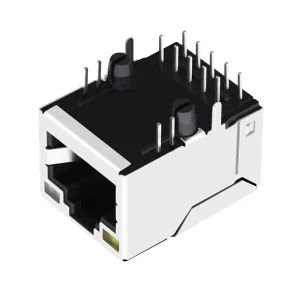
Whether utilizing Surface Mount Technology (SMT) or Through-Hole (THT) configurations, structural anchor pins must withstand repeated insertion forces (minimum 750 mating cycles) without solder-joint cracking.
As bandwidth standards migrate from Gigabit Ethernet to 2.5G, 5G, and 10G Base-T (Cat5e, Cat6, and Cat6a), the margins for return loss shrink dramatically. Achieving high return loss and low insertion loss requires internal magnetic cores wrapped in high-permeability ferrite material. The placement of internal components is simulated using high-frequency electromagnetic software to suppress cross-coupling between adjacent channels.
| Connector Sub-Type | Supported Protocols | Internal Magnetics | Shielding Material | Key Applications |
|---|---|---|---|---|
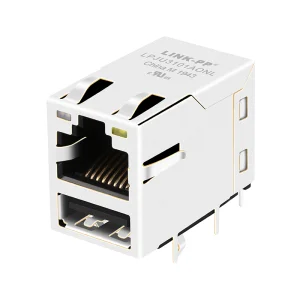
| RJ45 Integrated Jack (ICM) | 100Base-T to 10G Base-T | Yes (Transformers & Chokes) | Nickel-Plated Copper Alloy | Routers, High-Speed Switch Line Cards |
| SMT RJ45 Female Socket | 10/100/1000 Base-T | Optional (Low-profile config) | Phosphor Bronze / Tin Plated | IoT Gateways, Embedded Controller Boards |
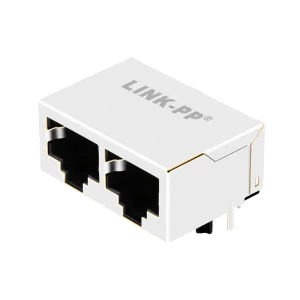
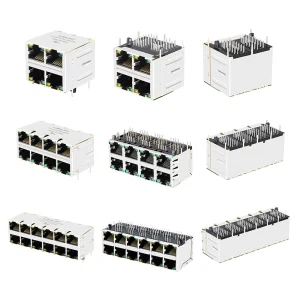
| Stacked Multi-port (2xN, 1xN) | Gigabit to 5G Ethernet | Yes | Fully Shielded with EMI Fingers | Telecom Central Offices, Enterprise Servers |
| Modular RJ45 Bridge / Couplers | Cat5e to Cat6a Pass-Through | No (Direct Impedance Match) | Stamped Metal Shell | Patch Panel Routing, Field Industrial Panels |
The global networking sector is experiencing a double-convergence: copper-based local area connections must seamlessly interface with high-speed fiber-optic uplinks. This is why a modern manufacturer cannot isolate copper connector production from optical transceiver engineering.
Our R&D team focuses heavily on mitigating the thermal challenges of Power over Ethernet (PoE, PoE+, and PoE++). Deploying up to 90W of direct current over standard copper twisted pairs inside an RJ45 assembly triggers resistive heating. If the connector design fails to dissipate heat or lacks thermal-tolerant insulating housings (such as High-Temperature LCP plastics), dielectric breakdown can occur.
Development of ultra-low profile SMT magnetic jacks featuring built-in LED indicators and electrostatic discharge (ESD) protection diodes on the connector substrate, saving 35% PCB real estate.
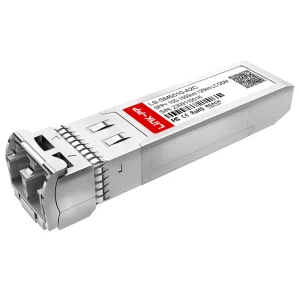
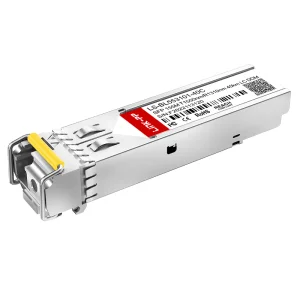
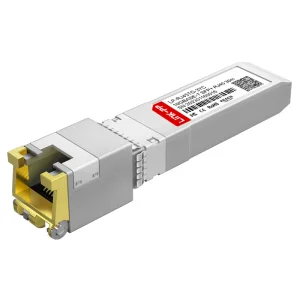
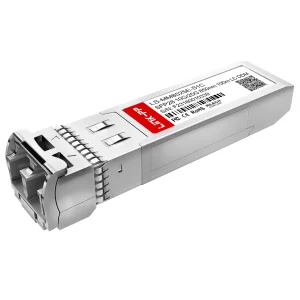
Optimizing media-converter architectures where 10GBASE-T Copper SFP+ Transceiver Modules convert high-speed electrical signals to optical pulses, providing low-latency bridging between legacy networks and modern core fiber rings.
Implementation of AI-driven optical and electrical test benches to measure return loss, insertion loss, and eye-diagram parameters in real time during the manufacturing assembly process, eliminating physical tolerance variances.
Our engineered solutions are deployed across multiple distinct operating environments:
In modern server farms, space constraints demand multi-port stacked jacks. Our 2x1 to 2x8 port Cat6a PCB Stacked Integrated Connectors allow high port densities, while internal shielding prevents crosstalk between adjacent ports. These assemblies interface directly with server motherboard architectures, enabling reliable up-links to top-of-rack switches.
Industrial floors are electrically noisy and physically challenging environments. Factors such as chemical exposure, high humidity, vibration, and mechanical shock can cause standard connectors to fail. Xelivor's vertical top-entry connectors and press-fit EMI-shielded configurations ensure mechanical stability. They maintain connection integrity under constant vibration and resist atmospheric oxidation through thick gold-plated contacts (up to 50 micro-inches).
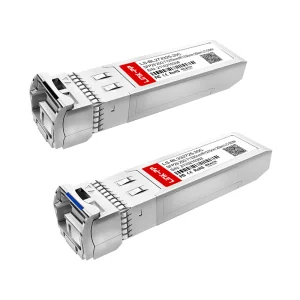
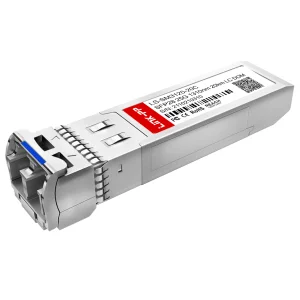
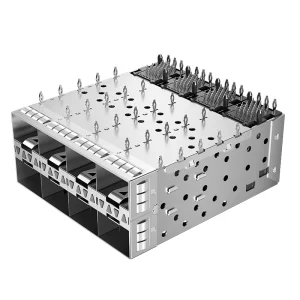
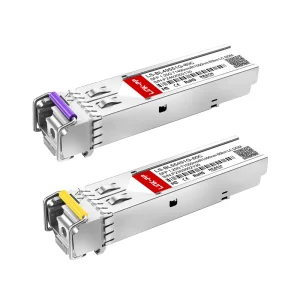
By matching our optical transceivers—including SFP, SFP+, SFP28, and BiDi modules—with copper media termination points, telecommunication operators achieve optimal performance. We provide the complete transmission path, from high-density switchboards utilizing SFP+ cages to the final RJ45 user interface on customer premise equipment (CPE).