Xelivor
Xelivor
Xelivor
High-precision RJ45 components deployed in Eastern Massachusetts' leading automation, laboratory, and network infrastructure developments.
Bridging local technology clusters with international manufacturing standards to power next-generation network hardware.
Boston, Massachusetts, is globally recognized as an epicentre of medical research, artificial intelligence, robotics, and marine technology. With institution-led ecosystems like MIT, Harvard, and the Route 128 technological corridor, local developers demand high-precision components that meet rigorous mechanical and electrical thresholds. The deployment of RJ45 female connectors in these environments is not a generic hardware choice; it requires specialized parameters such as 50μ" gold plating, robust EMI shielding, and built-in isolation magnetics to prevent signal degradation in dense laboratory and manufacturing settings.
In Boston's biotechnology corridor, network hardware must operate reliably in environments with strict EMI limits, requiring medical-grade isolation. For offshore instrumentation developed in institutions like Woods Hole Oceanographic, connectors require marine-grade resilience and enhanced sealing. Xelivor caters directly to these specialized demands by exporting precision-engineered Ethernet interfaces that support high data-rate applications and resilient power delivery.
The global copper connectivity market is witnessing a rapid transition from basic Cat5e installations to advanced Cat6a, Cat7, and Cat8 structured cabling systems. As IoT devices, IP cameras, and smart buildings multiply, the requirement for Power over Ethernet (PoE, PoE+, and PoE++ up to 90W) has redefined connector architecture. RJ45 female sockets must handle increased thermal dissipation, contact resistance minimization, and spark-resistance under load disconnection (IEEE 802.3bt standard).
Xelivor stands at the intersection of these advancements, exporting connectors certified under international compliance benchmarks like CE, FCC, RoHS, and REACH. By maintaining cross-compatibility with major PHY architectures, our female RJ45 magnetic modules (MagJacks) integrate seamlessly with high-speed switching boards globally, ensuring low insertion loss and high return loss characteristics from Boston to Tokyo.
Deciphering the electrical and mechanical metrics that define industrial-grade female RJ45 connectors.
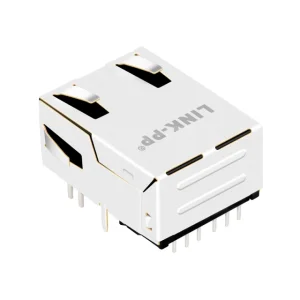
Built-in isolation transformers and common-mode chokes isolate signal lines, block EMI, filter line noise, and protect PHY chips from high ESD spikes. Our connectors ensure signal integrity up to 10G Base-T speeds.
Optimized for power delivery up to 90W per port (IEEE 802.3bt), utilizing copper alloy pins that limit temperature rise under continuous electrical loads, preventing socket deformation or housing degradation.
Engineered with phosphor bronze base pins electroplated with 50 micro-inches of pure gold over nickel plating. Housed in nickel-plated brass shells that guarantee low contact resistance and 750+ mating cycles.
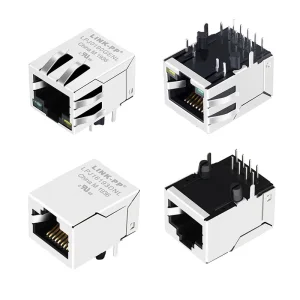
When implementing RJ45 connectors in industrial, academic, or enterprise hardware designs, engineers face a critical choice: Tab Up versus Tab Down spatial layout. This design dictates how the latching mechanism on the male patch cord engages with the PCB socket. Tab-up configurations are often preferred in low-profile designs to ease mechanical access on crowded rack units. Conversely, tab-down options are standard on standard network switches and single-board computers.
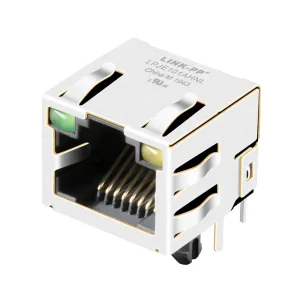
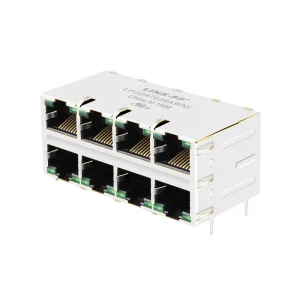
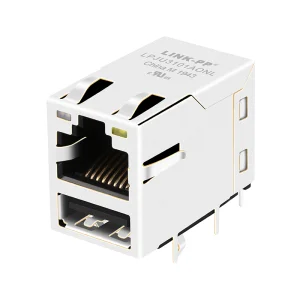
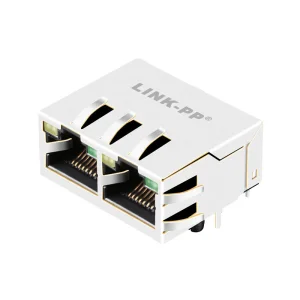
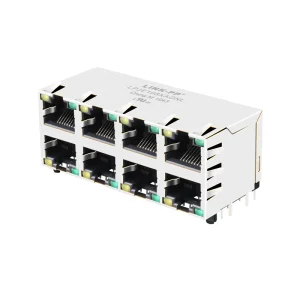
Another crucial metric is LED integration. By integrating diagnostic LEDs (typically green/yellow) directly into the front shield of the connector, system integrators can provide local hardware feedback (link status, transmission activity, power supply status) without routing optical light pipes or adding discrete LEDs to the PCB fascia. Xelivor’s product catalog includes stacked multiport arrays (2x1, 2x4, 2x8) with built-in LEDs and internal isolation matrices designed to maximize space and efficiency.
A premier manufacturer and global exporter of high-speed copper and optical transmission technologies.
Established in 2016, Xelivor Optoelectronics Co., Ltd. is a professional manufacturer of optical transceivers and fiber connectivity solutions, dedicated to serving global data center, telecom, enterprise network, and cloud computing industries. Operating from a modern manufacturing facility covering 386 m², we have built a solid reputation for delivering reliable, high-performance optical and copper communication products worldwide.
With over 8 years of industry experience and 6 years of export experience, Xelivor has achieved annual export revenues exceeding USD 12 million. Our products are exported to customers across North America, Europe, Southeast Asia, the Middle East, and South America, supporting a wide range of networking applications from enterprise infrastructure to hyperscale data centers.
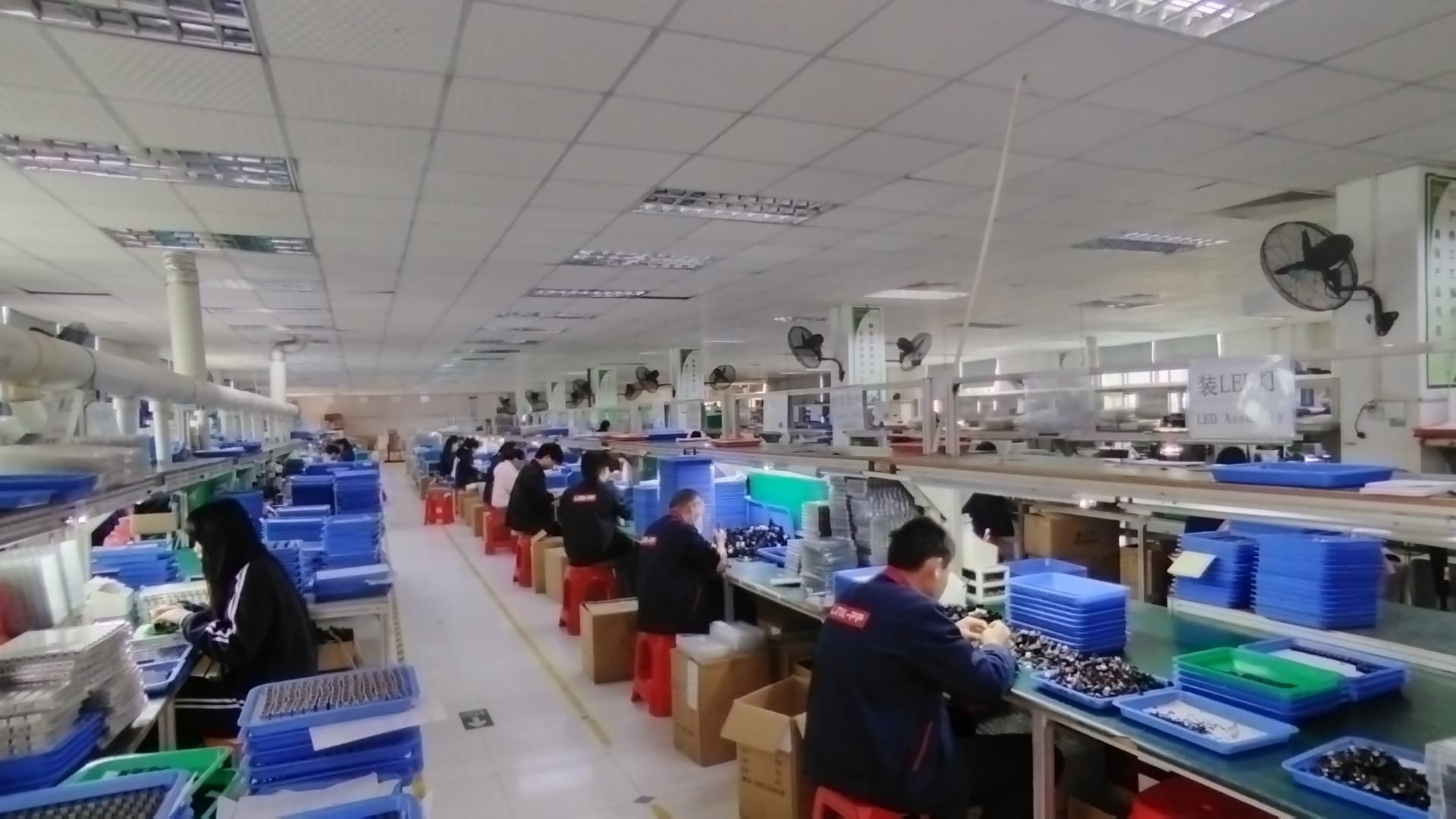

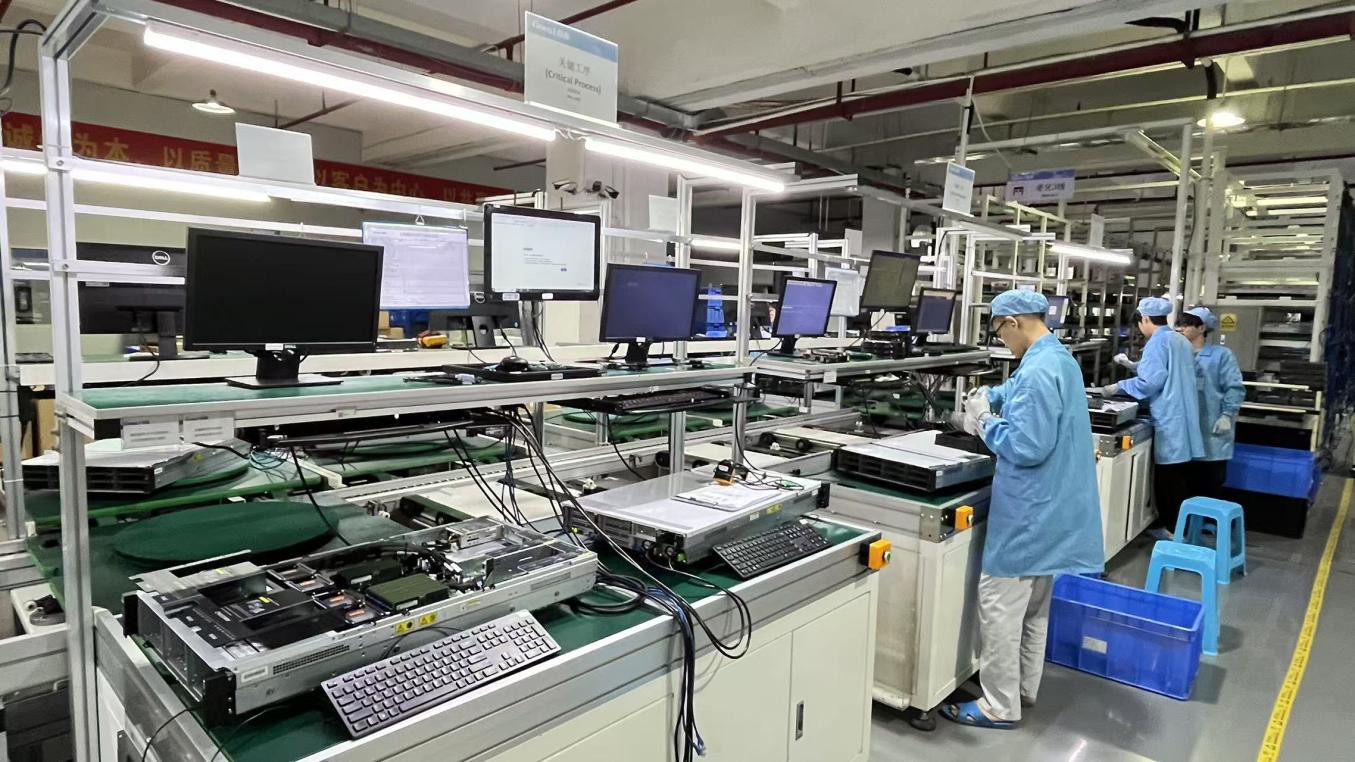
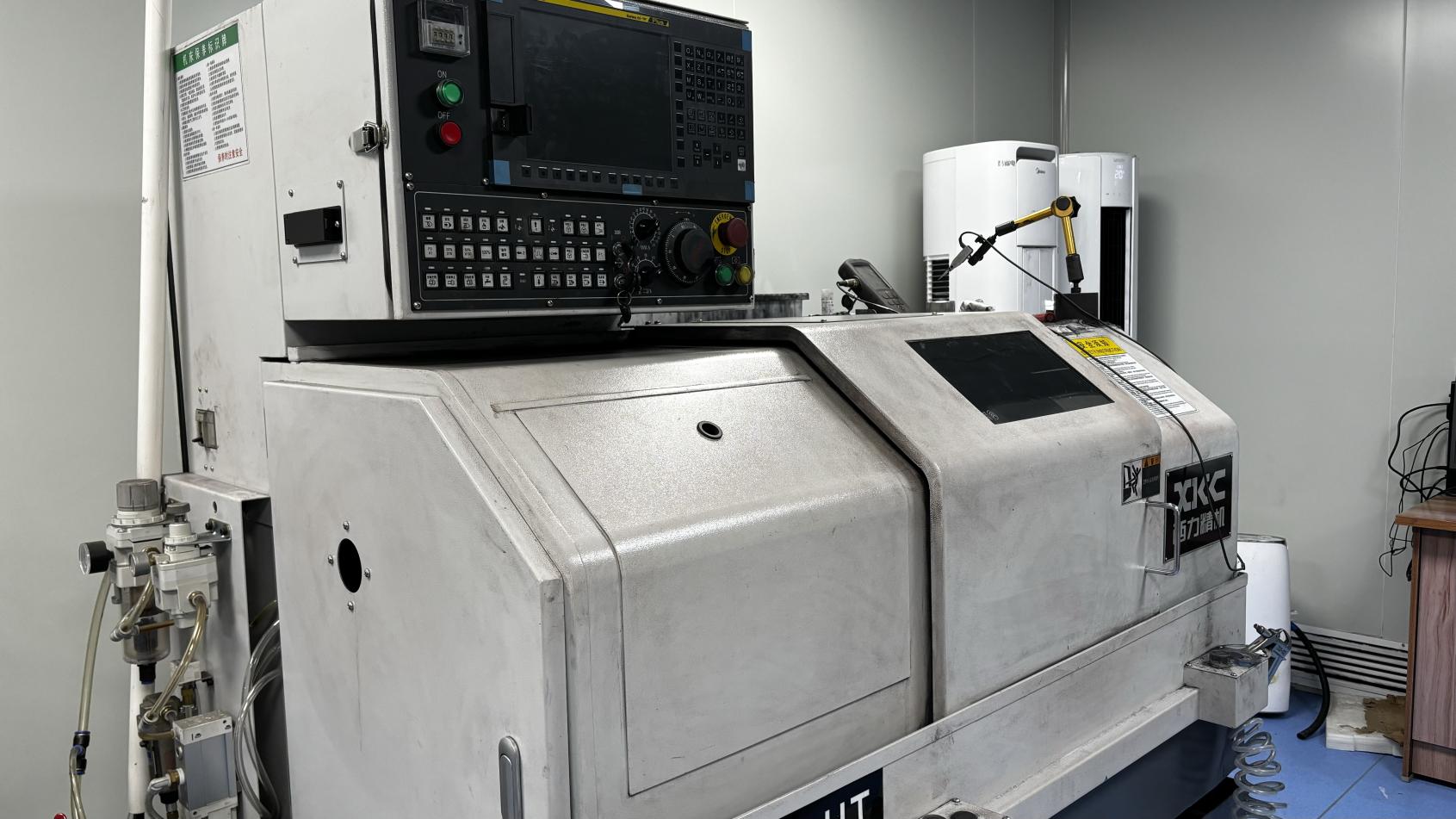
Quality is at the core of our operations. Our comprehensive quality management system incorporates incoming material inspection, in-process quality control, aging tests, compatibility verification, optical and electrical parameter testing, and final product inspection. A professional quality assurance team of 32 inspectors ensures every product meets strict international standards before shipment. The company maintains long-term cooperation with more than 850 supply chain partners, enabling stable sourcing, efficient production, and rapid delivery capabilities. Our flexible manufacturing system supports OEM, ODM, private label, customized firmware, customized labeling, and packaging services to satisfy diverse customer requirements.
Optimized connectivity solutions for high-density networking, stacking systems, and legacy/modern interface integrations.
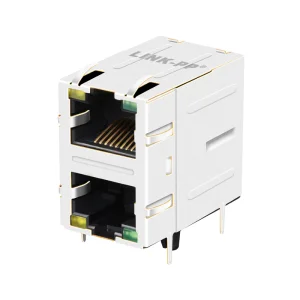
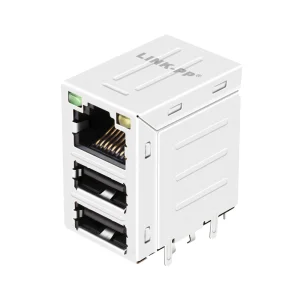
Analyzing custom system integrations where high-frequency copper and optical transmission pathways converge.
In modern industrial settings, electrical interference from heavy machinery, electric motors, and high-frequency actuators poses a threat to network data transmission. Xelivor’s integrated magnetics and shielding protect signals from electromagnetic interference (EMI). Standard RJ45 female connectors fail when subjected to intense physical vibrations. Our multi-port configurations and rugged through-hole soldering systems provide solid PCB retention, preventing physical disconnection or micro-discontinuities that lead to packet loss.
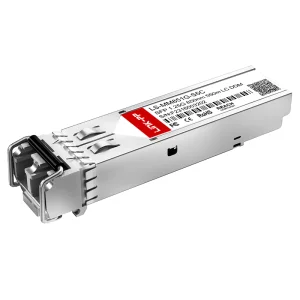
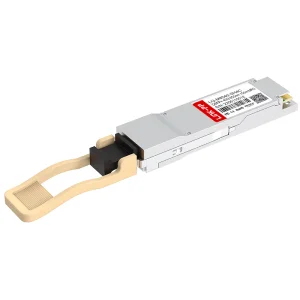
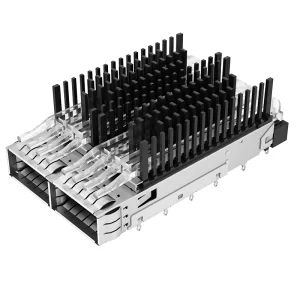
Additionally, for edge data hubs deployed in remote environments, the combination of fiber-optic backhauls and local copper connections is vital. Xelivor provides hybrid engineering configurations: high-throughput SFP/SFP+ transceivers (designed for up to 80km single-mode runs) and robust 10G Base-T RJ45 female ports. This dual capability ensures data can travel long distances via fiber before being distributed locally over high-bandwidth copper connections.
The rise of intelligent buildings requires unified infrastructure for data and power delivery. Modern commercial projects utilize Power over Ethernet (PoE) to run LED lighting fixtures, high-resolution surveillance systems, thermal control sensors, and wireless access points directly from network switches. Standard RJ45 connectors can experience pin wear from electrical arcing during disconnection under load.
To address this, Xelivor incorporates contact geometric architecture that isolates current-breaking zones from critical transmission contact areas. Our 2.5G and 10G Base-T PoE+ configurations ensure that even at 90-100W operations, thermal dissipation remains within IEEE specifications, preventing local dielectric failure and supporting high data and power transmission.
Combining copper RJ45 interfaces with optical transceiver technologies to support diverse network architectures.
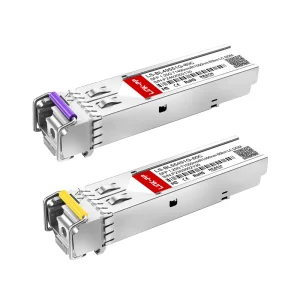
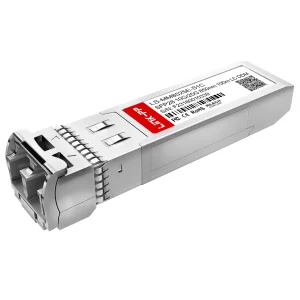
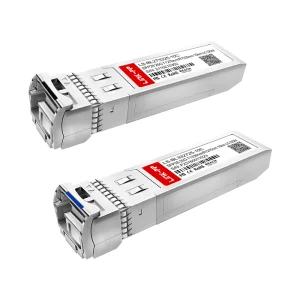
Technical support, deployment parameters, and shipping insights for system integrators and engineers.
Integrated magnetics, commonly referred to as MagJacks, combine isolation transformers, common-mode chokes, and capacitors within the RJ45 housing. This arrangement saves space on the PCB, simplifies design, blocks electromagnetic interference (EMI), filters noise, and provides electrostatic discharge (ESD) protection, securing the PHY chip against voltage spikes.
Gold plating is essential for protecting copper alloy contacts from oxidation and corrosion over time. A thickness of 50 micro-inches (50μ") is the standard for high-reliability and industrial applications. It ensures low contact resistance and guarantees at least 750 mating cycles, preventing signal degradation in environments with vibration or chemical exposure.
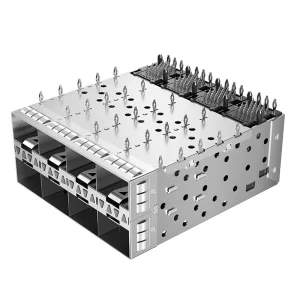
Our connectors and SFP cages are engineered to meet Multi-Source Agreements (MSA) and standard IEEE electrical specifications. We test compatibility using mainstream PHY chips and switch platforms. Our 68 R&D engineers can also customize EEPROM firmware to match specific hardware requirements, ensuring compatibility with brands like Cisco, Aruba, and TE Connectivity.
Yes. Our PoE+ and PoE++ connectors are manufactured with high-conductivity copper alloys and optimized pins to minimize contact resistance. The internal isolation transformers are rated to handle continuous bias currents up to the limits of IEEE 802.3bt (up to 90W-100W per port), keeping thermal generation within acceptable operating thresholds.
With an annual export volume exceeding USD 12 million, we ship to North America using major air and ocean carriers. Standard production lead times for customized configurations range between 2 to 4 weeks. We offer FOB, CIF, and DDP terms, providing appropriate customs paperwork, RoHS/REACH compliance files, and electrical test reports for quick clearance through US ports.